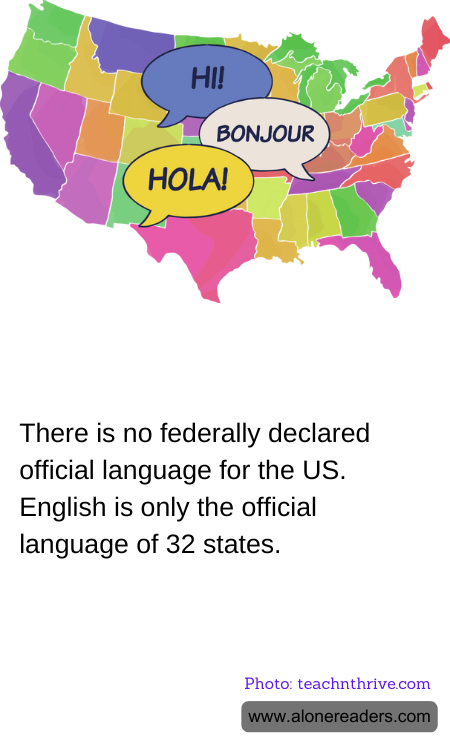
In the United States, there is no official language designated at the federal level, a fact that often surprises many given the predominance of English in American public and private life. The absence of an official language codified in federal law means that there is no legally mandated use of English or any other language in government communication and operations. This characteristic of American governance highlights the country's commitment to linguistic and cultural diversity, allowing for the use of multiple languages in official settings, particularly in areas with high concentrations of non-English-speaking residents.
However, despite the lack of a federal mandate, English is recognized as the official language in 32 of the 50 states. These states have laws that designate English as the primary language for governmental operations. This does not generally prohibit governmental services in other languages but does establish English as the primary medium for official communication and documentation. State laws regarding official languages are themselves diverse, reflecting the varied linguistic landscapes across the country. Some states like California and New Mexico facilitate extensive multilingual communications to serve their diverse populations, which include large numbers of Spanish speakers, among speakers of other languages.
The decision not to have an official language at the national level while allowing states to choose their approach respects the federal nature of American governance and acknowledges the cultural and linguistic diversity of the country. It provides a flexible framework that states can adapt to meet the needs of their residents, potentially improving accessibility to government services and participation in civic life for non-English speakers. This arrangement, however, is not without its challenges and controversies, particularly in areas of the country that are experiencing rapid demographic changes due to immigration.
Overall, the question of whether to have an official language in the United States remains a topic of political debate, reflecting broader conversations about national identity, integration, and cultural diversity. As the U.S. continues to evolve demographically, the discourse surrounding official language policies is likely to persist, raising important questions about how best to accommodate and integrate an increasingly diverse population while ensuring effective governance and social cohesion.
