More About This Card
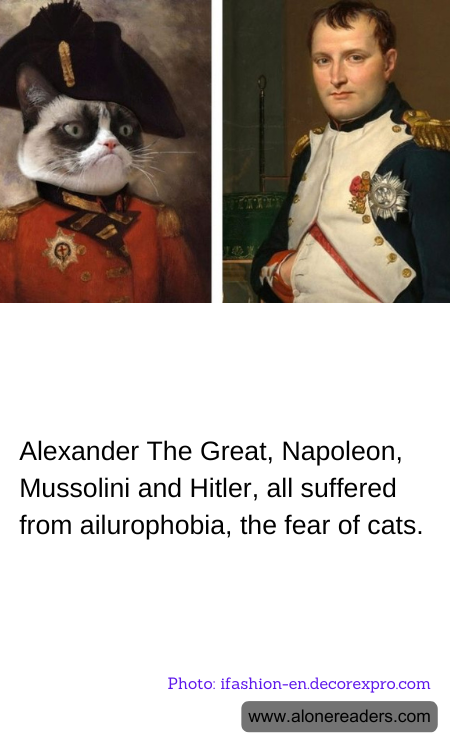
Alexander the Great, Napoleon, Mussolini, and Hitler are historical figures widely recognized for their powerful and, at times, fearsome leadership. Each left a significant mark on world history through their respective military and political actions. Interestingly, these leaders shared not only a common thread of ambitious authority but also a reported fear known as ailurophobia—the fear of cats. This peculiar commonality among such influential individuals is a fascinating psychological footnote in the broader narrative of their lives and reigns.
Ailurophobia is characterized by an intense, irrational fear of cats that can cause anxiety and avoidance behaviors. The origins of such fears can typically be traced to early negative experiences with cats, cultural influences, or even psychological predispositions. For towering personalities like Alexander, Napoleon, Mussolini, and Hitler, who were often portrayed as fearless and commanding, the phobia reveals a more vulnerable and human side.
In the case of Napoleon, who was known for his tactical brilliance in warfare and governance, it is ironic to consider that he might have been unsettled by something as seemingly benign as a domestic cat. Similarly, accounts suggesting that leaders such as Hitler and Mussolini, both of whom cultivated images of ruthless determination and control, shared this fear, add a layer of complexity to our understanding of these figures.
The discussion around such phobias also enhances our understanding of how even those seen as conquerors and dictators are not immune to the common fears and anxieties experienced by the general population. Whether these leaders’ fears of cats significantly impacted their decision-making or daily lives is less clear, but the existence of such phobias underscores the multifaceted personalities behind their historical personas.
Moreover, the presence of ailurophobia in such notable historical figures might influence cultural perceptions of cats and phobias. It feeds into the narratives of these leaders' lives, offering a point of relatability or, conversely, further mystification. As with all aspects of historical figures’ lives, the interplay between their public deeds and private fears remains a rich ground for both scholarly research and popular discussion. In bridging the gap between the past and present, such humanizing details remind us that history is not just about events and policies, but also about the real human fears and flaws of those who shape it.