More About This Card
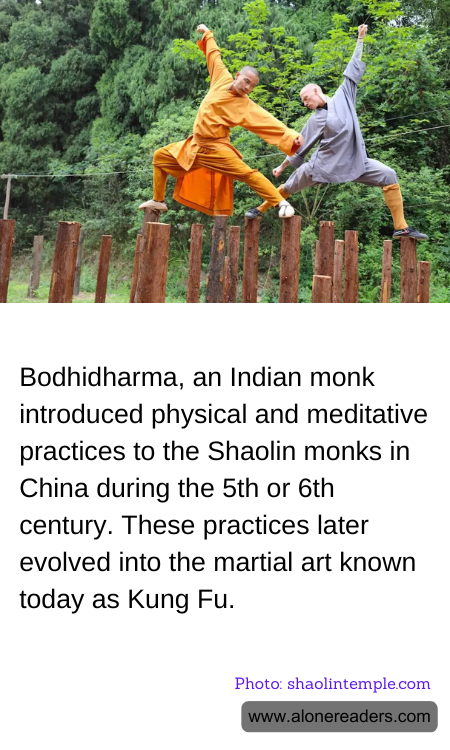
Bodhidharma, an Indian monk, is traditionally credited with the transmission of Chan Buddhism to China and is regarded as its first Chinese patriarch. Around the 5th or 6th century AD, Bodhidharma traveled to China, bringing with him meditation teachings and specific physical exercises that were later absorbed into the martial practices of the Shaolin monks. These exercises were not merely physical; they also contained a significant philosophical and spiritual component, embodying meditation through motion.
The legend states that upon arriving at the Shaolin Temple, Bodhidharma found the monks in poor physical condition, which was a substantial barrier to their meditation practices—a cornerstone of their spiritual journey. In response, Bodhidharma developed a series of exercises that could both enhance their physical strength and stamina and deepen their meditation capabilities. These routines, based on the Indian martial arts and augmented by Bodhidharma’s understanding of physiology and energy pathways (similar to what would be known later as meridians in traditional Chinese medicine), marked the nascent forms of Kung Fu.
These practices evolved over centuries, integrating various philosophical elements from Daoism and Confucianism as well, turning Kung Fu into not just a martial art but a path imbued with ethical, spiritual, and philosophical dimensions. It became a holistic discipline that emphasizes self-discipline, moral development, and self-defense, and is characterized by its fluid, graceful movements and its profound underlying spirituality.
While historical veracity can sometimes blur into mythology, the impact of Bodhidharma's teachings on the martial practices at Shaolin is unequivocal. The legacy of what he introduced to the Shaolin Temple has transcended time and geography, influencing numerous martial art forms and practitioners worldwide. This blending of physical skill development with spiritual and philosophical insight highlights an enduring aspect of traditional martial arts, attributing a deep cultural significance to the practices developed and refined at Shaolin.