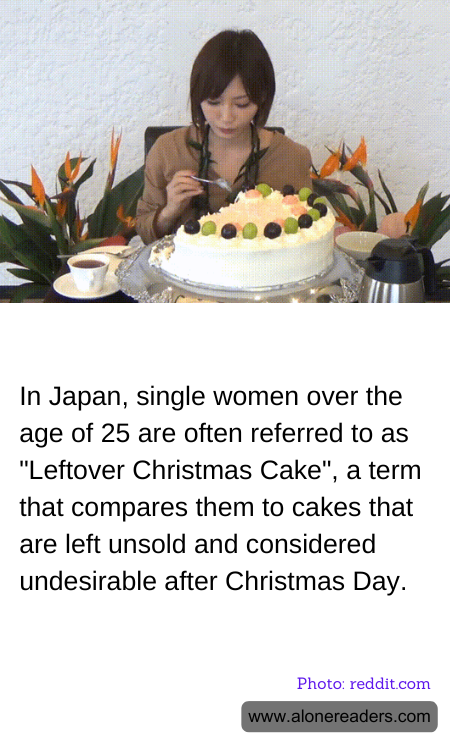
In Japan, societal pressures and traditional views on marriage can weigh heavily on women, highlighted by the controversial term "Leftover Christmas Cake," used to refer to single women aged 25 and older. This term stems from the analogy that, much like Christmas cakes that are not sold by December 25th, women who remain unmarried after their mid-twenties are viewed as less desirable. This reflects deeper societal views on the role of women and the expectation that they should marry and start a family before reaching a certain age.
The phrase "Christmas cake" originates from the Japanese custom of celebrating Christmas with a specific style of cake, which is only popular up until December 25th. After this date, the cakes are often discounted or unsold, a fate analogously applied to older unmarried women in a critical and diminishing context. Such terms underscore the persistent stereotypes and gender expectations that exist within Japanese culture, where familial and societal pressures often dictate personal choices, particularly in the context of marriage and relationships.
Despite these challenges, there is a growing number of women in Japan who are choosing to focus on their careers, personal growth, and independence rather than rush into marriage. The rise of women in the workforce and shifts in individual priorities have sparked discussions about the need for change in societal perceptions. As a result, there is increasing encouragement for greater acceptance of diverse life choices, and for the idea that a woman’s value is not tied to her marital status.
This issue is part of a larger dialogue on gender equality in Japan, which involves addressing deep-seated norms and economic structures that discourage women from remaining in the workforce after marriage or childbirth. While Japan has made strides towards gender equality, the lingering prevalence of terms like "Leftover Christmas Cake" indicates that there is still substantial progress to be made in changing societal attitudes and dismantling stereotypes that restrict women's choices and opportunities.
