More About This Card
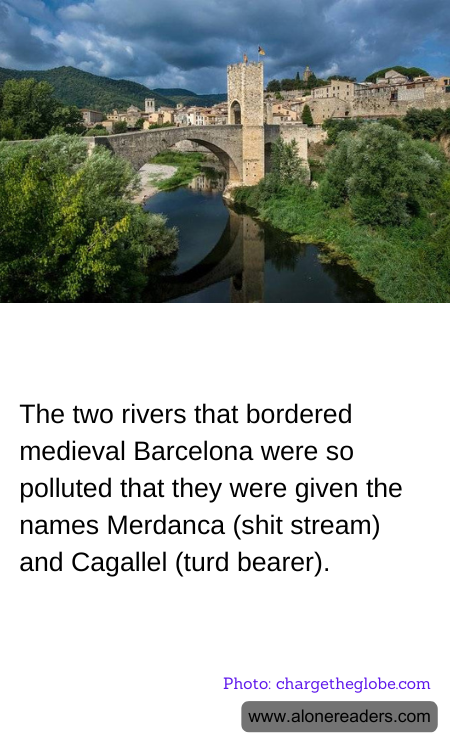
In medieval Barcelona, the challenge of urban waste management was vividly reflected in the nomenclature of its rivers. Two of the rivers that bordered the city were notoriously polluted, primarily due to the disposal of sewage and refuse by the local population. These rivers were colloquially named Merdanca and Cagallel, translating roughly to "shit stream" and "turd bearer." These names brilliantly underscore the level of contamination these water bodies endured during that period, showcasing a direct and unfiltered folk response to environmental degradation.
Barcelona during the medieval era, like many European cities, had limited infrastructure for sanitation. This was a time before the advent of engineered sewage systems, and rivers often served dual roles as sources of water and as dumping grounds for human and industrial waste. The pollution in these rivers not merely symbolized the unsanitary conditions but also posed significant health risks. Waterborne diseases were rampant, and the quality of life was directly impacted by the poor environmental conditions.
Over the years, dealing with urban waste and managing sanitation became a growing concern. The names given to the rivers served as a constant reminder and eventually contributed to urban planning and public health reforms. Efforts to clean up the waterways and improve sanitation facilities grew, particularly with the advent of modern urban planning and development techniques.
Today, the history of Merdanca and Cagallel serves as a potent reminder of the environmental impacts of urban waste, while also highlighting the evolution of public health initiatives and urban planning. In contemporary times, such historical instances continue to enlighten and influence modern approaches to environmental management and urban sanitation, underscoring the perennial relationship between human settlements and their natural environments. Modern Barcelona, with its far more sophisticated infrastructure and environmental regulations, stands in stark contrast to its medieval counterpart, reflecting centuries of progress and the ongoing challenges of sustainable urban development.