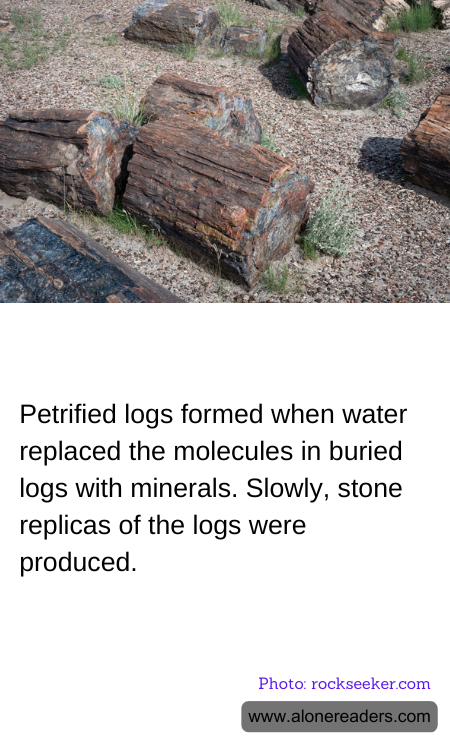
Petrified logs represent one of the most fascinating natural phenomena, where what was once organic material has been transformed into stone through a process that extends back millions of years. This process, known as petrification, primarily occurs when wood becomes buried under sediment and is initially preserved due to a lack of oxygen, which slows the processes of decay. Over time, mineral-laden water flows through the sediments, introducing minerals into the porous parts of the buried logs.
The minerals, typically silicates like quartz, gradually replace the plant's organic material cell by cell. Such an intricate process maintains the original structure and details of the wood, effectively turning it into a stone replica, capturing the texture and even the ring patterns of the original log. Each piece of petrified wood is unique, often displaying a vibrant array of colors depending on the minerals involved. For instance, iron can bring a red or yellow hue, copper provides green or blue tinges, and manganese can add pink or orange.
This transformation results in the logs having the hardness of quartz, making them extremely durable and resistant to weathering. Petrified wood can be found in various places around the globe, but large concentrations known as petrified forests offer the most arresting landscapes where these stone logs lie scattered across arid plateaus. Notable petrified forests include those in Arizona, Egypt, and Argentina, offering panoramas that not only bear witness to historical biological life but also to the complex geological processes that shape our planet.
Petrified logs are vital to science, particularly in the fields of paleontology and geology, as they provide insights into the environmental conditions that prevailed millions of years ago. By studying the mineral content and location of these logs, scientists can infer climate patterns, the occurrence of geological events like volcanic eruptions, and shifts in the earth's crust. Beyond their scientific value, petrified woods are also used decoratively and commercially. They are polished and carved into jewelry, ornaments, and even furniture, prized for their beauty and the link they provide to the deep, geological past.
