More About This Card
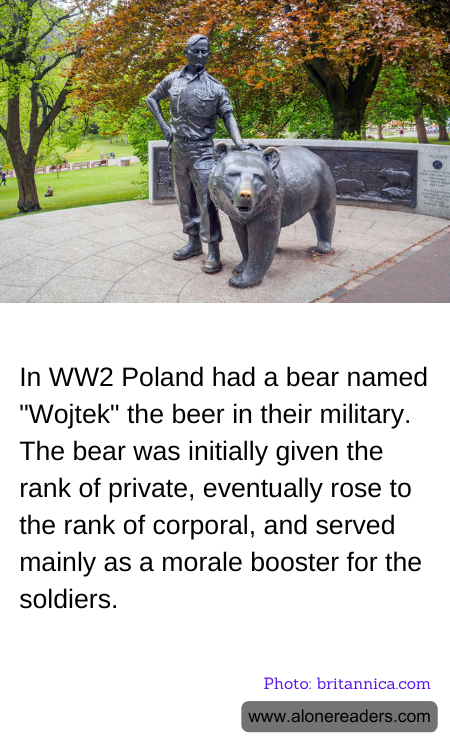
During World War II, amidst the harrowing tales of bravery and tragedy, there emerged an unusual and heartening story of a Syrian brown bear named Wojtek who became an honorary member of the Polish military. Found as a cub in Iran in 1942 by Polish soldiers of the 22nd Artillery Supply Company, Wojtek was adopted by the troops. Initially, he served as a source of amusement and companionship in a time of widespread distress.
As Wojtek grew, so did his involvement with the military unit. He was formally enlisted as a private to provide him with rations and transportation. Known for his remarkable personality, Wojtek quickly endeared himself to his fellow soldiers by mimicking their behavior. He was often seen saluting when greeted and was known to smoke and even drink beer with the troops. His presence proved to be a significant morale booster for the soldiers, who were far from home and fighting in intense and terrifying conditions.
Wojtek’s role took a more practical turn during the Battle of Monte Cassino in 1944, one of the war’s most brutal confrontations. Here, he carried crates of ammunition and did not drop a single one, demonstrating both strength and an uncanny understanding of the soldiers' needs. His actions were pivotal not only on the battlefield but also in strengthening the spirits of his companions. In recognition of his contributions and his growing popularity among the troops, Wojtek was promoted to the rank of corporal.
After the war, Wojtek settled in Scotland with the rest of his company. His post-war life was quiet, residing at the Edinburgh Zoo, where he became a local celebrity and continued to receive visits from Polish war veterans. In the years following his death in 1963, Wojtek’s extraordinary life has been commemorated in various forms including books, documentaries, and monuments, most notably in Kraków, Poland, and Edinburgh.
Wojtek’s story remains a poignant reminder of the bonds that can form under the most unexpected circumstances and highlights the diverse ways in which all soldiers, human or not, have contributed to war efforts throughout history. His legacy underscores not just the horrors of war but also the enduring spirit of camaraderie and resilience.