More About This Card
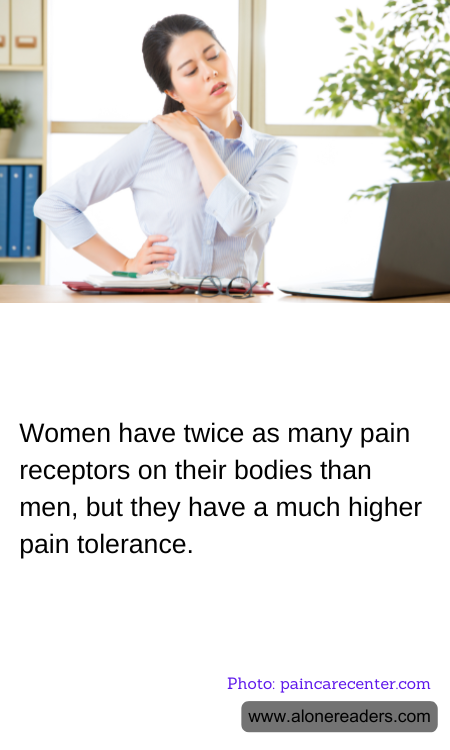
The intriguing differences in pain perception and tolerance between men and women have long been a subject of both scientific study and societal interest. Women, interestingly, possess nearly double the amount of pain receptors on their bodies compared to men. Despite this anatomical disparity, numerous studies suggest that women exhibit a considerably higher threshold for enduring pain.
This phenomenon can be partially explained through biological, psychological, and social factors. Biologically, the difference in hormone levels plays a significant role. Estrogen, the primary female sex hormone, has been shown to affect pain sensitivity. During certain phases of the menstrual cycle, for instance, when estrogen levels are high, women may experience less sensitivity to pain. Additionally, natural painkillers known as endorphins, are also released in different quantities and cycles influenced by hormones, which could contribute to varying pain tolerances across genders.
Psychologically, women often employ different coping strategies than men, which could affect pain perception. Generally, women are more likely to use social support and positive reaffirmation to manage pain. Cultural and societal norms may also influence how pain is experienced and expressed. Women may be more socially permitted to express pain and seek support, whereas men might feel compelled to adhere to traditional norms that equate stoicism with masculinity.
Research also describes how the cerebral cortex, the part of the brain that interprets pain, processes pain signals differently between the sexes. Brain imaging studies have shown that certain areas of the brain involved in pain processing are more active in women than in men, which could contribute to a higher sensitivity to pain, yet a greater ability to handle intense discomfort over longer durations.
This data is crucial not only for understanding fundamental differences between men and women but also for medical practice. The approach to managing and treating pain must be nuanced and gender-specific, considering these biological and psychological variances. This could lead to more effective, personalized treatments for pain management that can cater specifically to the needs of men or women, potentially improving outcomes and patient comfort. Such insights reinforce the importance of personalized medicine and highlight the necessity for continued research in gender differences in medical science.