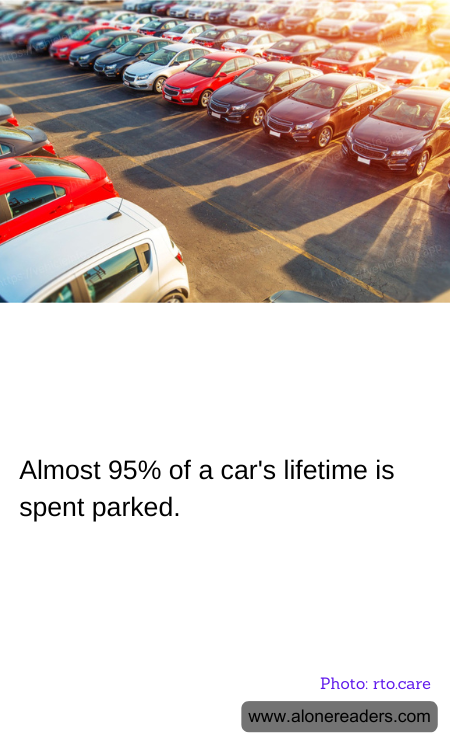
Cars are an integral part of modern life, often considered indispensable for commuting, accomplishing daily errands, and facilitating leisure travel. Despite their active role in our daily routines, studies have shown that the average car spends about 95% of its life parked. This statistic exposes a surprising inefficiency in the typical use of automobiles and suggests that these essential machines are, paradoxically, rarely used to their full potential.
This high percentage of idle time can be attributed to several factors. Primarily, the daily routine of many individuals involves driving to work or school where their vehicle remains stationary for the majority of the day. Additionally, cars are also left unused overnight, further contributing to their inactivity. Urban planning and modern lifestyle demand that most households own a car, yet the infrastructure and patterns of use do not necessitate constant mobility.
The economic and environmental implications of this inefficiency are significant. From an economic perspective, cars represent a substantial investment that is underutilized. Individuals spend a considerable amount of money on purchasing a vehicle, which depreciates in value from the moment it is driven off the lot, only to let it sit idle most of the time. On the environmental front, the production and eventual disposal of cars consume vast resources, including materials and energy, contributing to carbon emissions and environmental degradation.
In response to this, urban planners and technologists are rethinking mobility. Car-sharing services and ride-sharing platforms have gained popularity as practical solutions to reduce the number of vehicles on the road, thereby potentially decreasing idle times. Similarly, the development of autonomous vehicles could revolutionize car use efficiency by enabling cars to serve multiple users or perform tasks without a human driver.
Considering the future, the statistics about car idle times challenge us to rethink our relationship with personal vehicles. Embracing alternative transportation modes like public transit, cycling, or even walking when possible, can contribute to more efficient and environmentally friendly urban living. Furthermore, as technology evolves, the integration of smart transportation systems could further optimize how we use cars, making the 95% idle time a figure of the past. This shift not only promises a reduction in individual spending on transportation but also a significant impact on urban sustainability and global environmental health.
