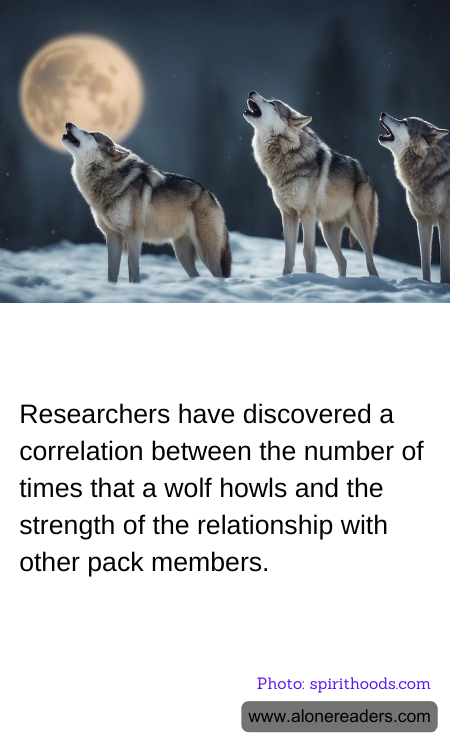
In recent research, scientists have uncovered intriguing insights into the social dynamics of wolves, revealing that the frequency of howling among these creatures is closely linked to the strength of their relationships within their pack. Wolves are highly social animals, known for their complex hierarchies and deep connections with pack members. This study illuminates how these relationships influence their communication behaviors, particularly howling.
Wolves use howling as a primary mode of communication, serving purposes ranging from coordinating hunting activities to reinforcing social bonds or signaling territory presence. The study found that wolves howl more frequently with and in the presence of those pack members to whom they are more closely bonded. These findings suggest that howling is not just a functional tool but also a vocal expression of social affiliation and emotional closeness.
The research involved observing various wolf packs in controlled environments where scientists could monitor interactions and measure howling occurrences. By employing techniques like collar-mounted recording devices, researchers were able to gather data on howling frequency in relation to specific social interactions. They noticed higher rates of howling in wolves that engaged in more frequent social activities such as grooming, playing, or cooperative hunting. Additionally, when certain wolves were temporarily isolated from the pack, the rest of the members howled more frequently, potentially as a form of communication or expression of missing a pack member.
The implications of these findings extend to the management and conservation strategies for wolves in the wild. Understanding the social structures and communication strategies of wolves can help in developing more effective conservation methods that respect the natural behaviors and needs of these animals. Moreover, this research adds depth to our understanding of the emotional capacities of wolves, providing further evidence that like humans, their social and emotional lives are complex and integral to their survival and well-being.
This newfound knowledge of wolf howling behavior and its social underpinnings not only captivates those interested in animal behavior and wildlife biology but also provides a profound reminder of the intricate social worlds that exist in nature, paralleling in some aspects, the emotional and social complexities seen in human societies.
