More About This Card
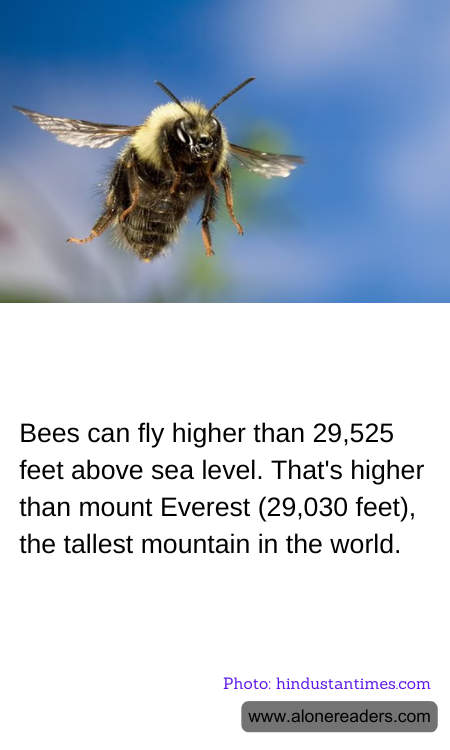
Bees, those small yet incredibly industrious insects, are capable of reaching heights that exceed even Mount Everest, the highest peak on Earth. Mount Everest stands at approximately 29,030 feet, but bees have been recorded flying at altitudes of over 29,525 feet. This remarkable capability is particularly fascinating given the bee's size and the thinness of the air at such high altitudes.
The ability of bees to fly so high is an adaptation to their environments, particularly in regions where winds can blow them off course and up over high mountain ranges. The bee’s wing structure and the powerful flight muscles enable it not only to lift off the ground but also to endure the frigid temperatures and lower oxygen levels found at high altitudes. This feat is even more astonishing considering that the flight mechanisms of bees are significantly different from those of birds, which are frequently observed at high altitudes.
Flying at such high levels is not typical behavior for most bees. However, their ability to do so shows their versatility and adaptability. Scientists study these and other unusual behaviors to better understand how bees interact with their environments and the potential impacts of climate change and habitat loss on their populations. This ability to fly high is also a testament to the bees’ crucial role in ecosystems as pollinators, which involves traveling broad distances to spread pollen.
The fact that bees can achieve such heights also sheds light on their surprising resilience and the complexity of their physiological makeup, which continues to intrigue and challenge researchers. By studying these capabilities, scientists can also learn more about insect migration and survival strategies, adding another layer of understanding to the ecological significance of these creatures. Furthermore, the resilience of bees inspires solutions for challenges in robotics and aeronautics, proving once again that even the smallest creatures can spark innovations that reach beyond their immediate ecological roles.