More About This Card
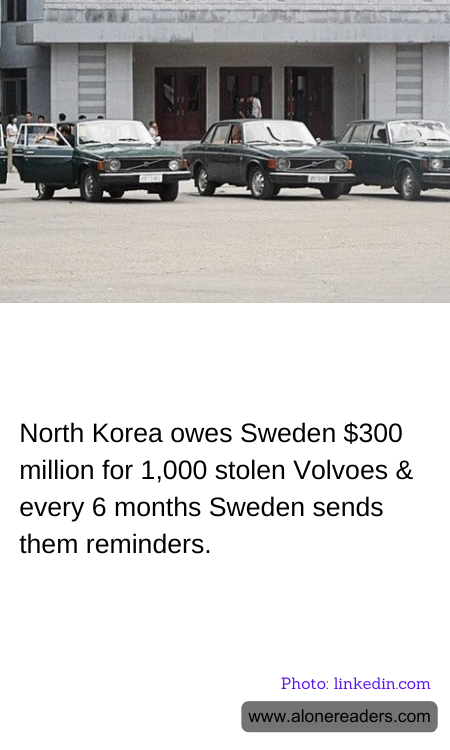
In a rather unusual chapter of international finance and diplomacy, North Korea owes Sweden over $300 million for 1,000 Volvo cars. These vehicles were shipped to North Korea in the 1970s but were never paid for, leading to a decades-long quest by Sweden to reclaim the debt. At the heart of this issue is not just an unsettled financial transaction but also a glimpse into the complex and often strained relations between North Korea and much of the Western world.
The cars were delivered to North Korea as part of a trade deal made in 1974. North Korea received 1,000 Volvo 144 sedans, which at the time was a robust model popular for its safety and reliability. The deal was supposed to open doors to a lucrative market for Swedish companies; however, North Korea failed to live up to its part of the agreement and the payments for the cars, as well as several additional business dealings involving mining equipment and factory tools, were never made.
Since then, Sweden has routinely issued reminders to North Korea about its outstanding debt. Every six months, a bill is sent, but these efforts have repeatedly been ignored. The amount, adjusted for inflation and interest, has grown significantly over the years. This debt serves as an unusual yet persistent reminder of the fraught relationships and failed diplomacy between the two nations.
Sweden operates an embassy in Pyongyang, making it one of the few Western countries to have a diplomatic mission in North Korea. While the primary role of this mission encompasses diplomatic responsibilities, such as assisting with various international negotiations and humanitarian efforts, the issue of the unpaid debt inevitably features in its diplomatic exchanges.
The situation is emblematic of the larger struggles that nations face when engaging with North Korea, a country notorious for its isolationist policies and economic mismanagement. For Sweden, the episode demonstrates the risks inherent in international trade, especially with nations that have unpredictable governance structures and economic policies.
Despite the bleak prospects of recovering the debt, Sweden persists, asserting both a principled stand on fulfilling international obligations and a hope, perhaps, that sustained diplomatic engagements can slowly encourage North Korea to open up more to the international community. The peculiar case of the 1,000 Volvos remains a curious footnote in international relations, illustrating the complexities and challenges of diplomacy and trade.