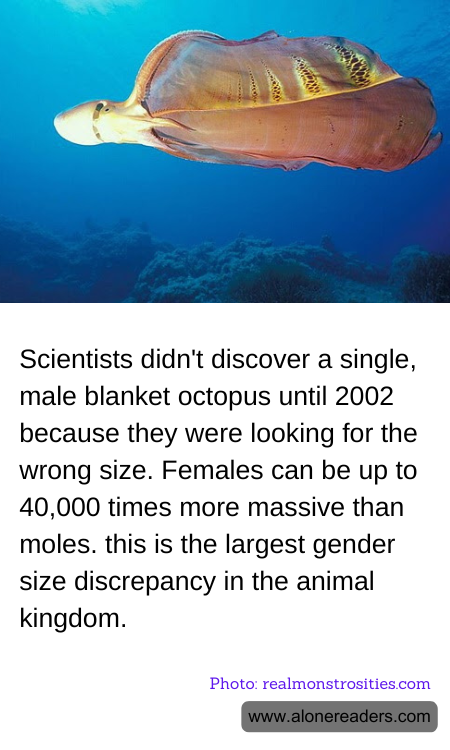
The discovery of the male blanket octopus in 2002 posed a significant shift in marine biology's understanding of sexual dimorphism in the animal kingdom. Traditionally, researchers had been on the lookout for specimens that would match the size and grandeur of the already known female blanket octopus, which can be quite large. Female blanket octopuses are an impressive sight, stretching up to six feet long and characterized by their striking, blanket-like membranes that stretch between some of their arms. Their grand size starkly contrasts with the male, which measures only a few centimeters when fully grown.
This stark size disparity between genders is the largest known in the animal kingdom. The males are not only smaller but are also less flamboyant compared to the conspicuously colored and dramatic females. These males lead elusive lives, making the initial discovery particularly challenging. Initially, scientists were unprepared to find such a tiny counterpart to the expansive females. This dramatic size difference had led researchers to overlook males during exploratory missions, as they did not fit the expected profile of the species based both on size and appearance.
Misidentification was a major hurdle. Researchers previously may have encountered the male blanket octopuses but dismissed them as juveniles or entirely different species due to their minute stature. The revelation of the male’s true nature has broadened understanding of octopus biology and emphasized the variability of sexual dimorphism across different species. It's a compelling example of how gender can influence not just reproductive roles but also morphology to an extreme extent, influencing the approaches and methods in marine research.
Understanding why such dramatic size discrepancies exist in species like the blanket octopus poses fascinating questions about evolutionary pressures and adaptations. Small size in male blanket octopuses could be advantageous in evading predators and in their role in reproduction, and they utilize a “hit-and-run” strategy, quickly delivering sperm and continuing on. This strategy minimizes the time they are vulnerable to predation and may have driven their size toward the smaller end of the spectrum over evolutionary time.
The initial misunderstanding and eventual discovery of the male blanket octopus not only enlightens us about the wonders of marine life but also serves as a reminder of the assumptions that can often steer scientific inquiry..hxx
