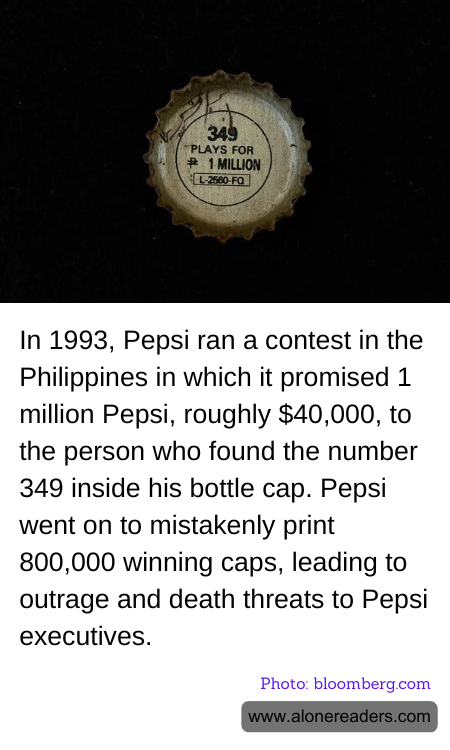
More About This Card
In 1993, PepsiCo launched a promotional campaign in the Philippines that turned into a public relations catastrophe. The promotion, aimed at boosting sales and increasing market share, promised consumers that they could win up to one million pesos (approximately $40,000 at the time) by finding a bottle cap with the winning number, 349. The anticipation and excitement turned into chaos when it became clear that due to a grave error in the production process, 800,000 bottle caps were printed with the winning number instead of just one.
The error was catastrophic. Tens of thousands of people, elated to think they had won the large cash prize, overwhelmed Pepsi’s offices in anticipation of collecting their winnings. However, the joy quickly turned into anger when Pepsi declared that it was an error and that they could not honor all the winning claims. The initial offer, intended as a fun and engaging marketing strategy, rapidly ignited widespread public outrage.
The fallout from this mistake was severe. Protests erupted, and in some instances, they turned violent. Pepsi delivery trucks and bottling plants were attacked, leading to several injuries. In a particularly tragic outcome, a grenade was thrown at a Pepsi truck, resulting in the death of a person and multiple others being injured. Pepsi executives faced serious threats to their safety, clouding the corporate atmosphere in fear and uncertainty.
This promotional disaster not only resulted in violence but also led to several legal battles. Numerous lawsuits were filed against Pepsi, claiming compensation for the alleged winners who never received their promised fortunes. As for Pepsi, the cost was huge—not just in monetary terms to deal with the fallout and legal confrontations but also in terms of the brand's image. Trust in the brand shattered, creating long-lasting damage to PepsiCo’s reputation in the Philippines.
This incident serves as a poignant reminder of the importance of accuracy and oversight in promotional marketing, as well as the potentially vast consequences when such big-scale promotions go awry. Pepsi's 1993 promotional fiasco is often cited in marketing textbooks as a cautionary tale on the risks involved in sales promotions and the critical nature of operational oversight.