More About This Card
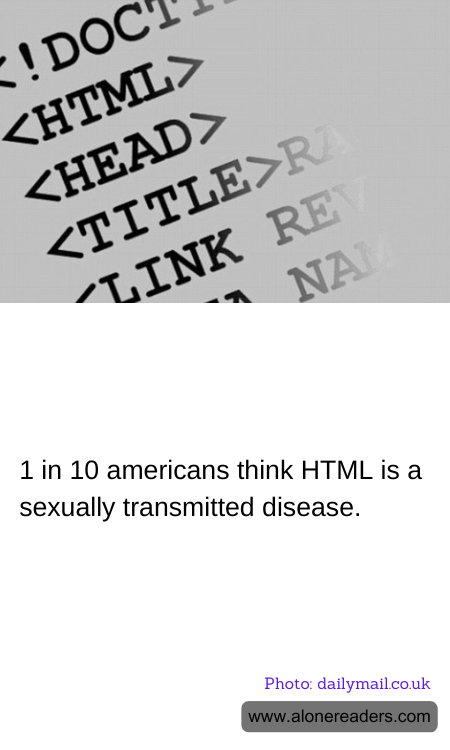
In a startling revelation from a study that aimed to measure the digital literacy of the American public, it emerged that a surprising number of Americans are confused about basic technological terms, with some even thinking 'HTML' (HyperText Markup Language) - the language used for creating web pages - is a sexually transmitted disease (STD). This rather humorous confusion highlights a significant gap in general tech knowledge among some segments of the population.
HTML, of course, is not related to health but is a cornerstone technology of the Internet. Its role is essential in the development and the structuring of content on the internet. The mix-up could be attributed to the proliferation of acronyms and jargons in both technology and medicine which can be baffling for those not well-versed in these fields. Moreover, this mix-up calls attention to the educational challenges that confront digital literacy. In a world increasingly driven by technology, understanding such basic concepts is becoming more crucial than ever.
Addressing this gap is important not just for individual enrichment but also for ensuring that the workforce can meet the demands of ever-evolving technological workplaces. Enhancing digital literacy should involve educational systems reforming curricula to include more foundational technology education, as early as primary grades. Moreover, for adults, community courses and online resources could also play a pivotal role in bridging these knowledge gaps.
Moreover, there is a need for the tech industry to also play a role in demystifying and disseminating fundamental knowledge about how technologies work. By employing clearer language, reducing the use of unnecessary jargon, and perhaps injecting a bit of humor and creativity in educational campaigns, tech companies can help elucidate their increasingly influential products and services.
As the digital landscape evolves, so too must our approach to understanding it. While the thought of HTML as a sexually transmitted disease may serve as a light-hearted anecdote, it fundamentally underscores a more serious and imperative issue of enhancing digital literacy. Programs both in education and industry-led initiatives that aim to educate the public digitally are crucial in ensuring that no one is left behind in our move towards an increasingly digital future.