More About This Card
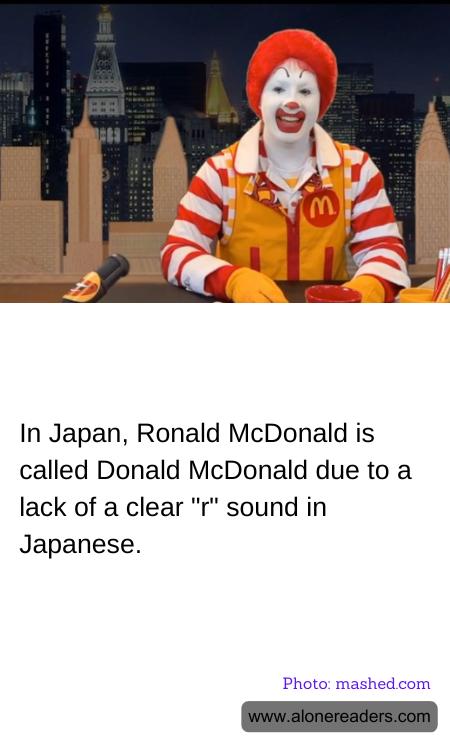
In Japan, the iconic mascot of the McDonald’s fast food chain is called Donald McDonald instead of Ronald McDonald. This adaptation was made due to the phonetic challenges of the Japanese language, which does not have a direct equivalent to the "r" sound prevalent in English. In Japanese, the closest sounds are "ra," "ri," "ru," "re," and "ro," which are distinctly different from the English "r."
The naming switch to "Donald McDonald" comes as part of a broader tendency in Japanese adaptations of foreign brands and names, where maintaining phonetic ease and sound appeal is crucial. This ensures that the name resonates well with the local population and is easy for Japanese speakers to pronounce. In advertising and promotional materials, this slight change helps in making the brand more accessible and relatable to the general public in Japan.
The adaptation goes beyond mere pronunciation, reflecting the global brand's sensitivity to cultural nuances. McDonald's has always been adept at tweaking its offerings and branding to match local tastes and preferences across the globe. In Japan, this has not only meant a change in the mascot’s name but also adjustments in menu items and marketing strategies to suit local tastes and cultural practices. Such localizations are significant in a market as distinct and nuanced as Japan, where Western brands have to make considerable efforts to fit into the local landscape.
The subtle renaming of Ronald McDonald to Donald McDonald is a perfect example of how global brands navigate linguistic and cultural barriers. It illustrates a thoughtful approach to globalization that involves blending into local cultures while maintaining the brand’s universal appeal. For most Japanese consumers, Donald McDonald is just as beloved and identifiable as his counterpart Ronald is globally.