More About This Card
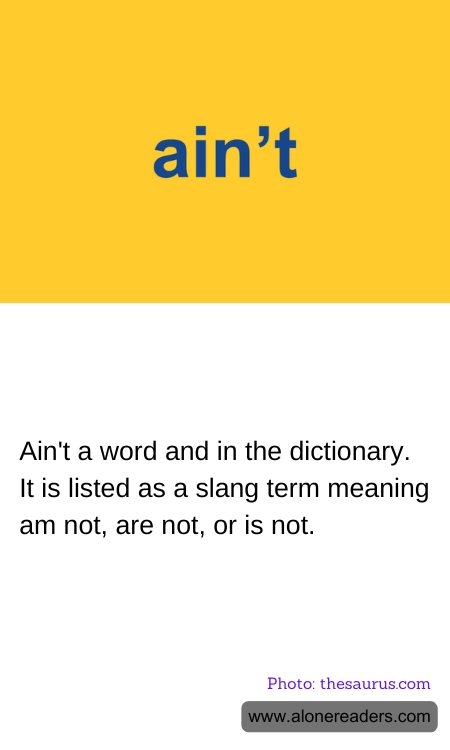
The word "ain't" has long been a subject of debate among linguists, educators, and advocates of standard English usage. Despite its controversial status, "ain't" is indeed found in many dictionaries today. Typically classified as slang or informal usage, "ain't" is a contraction that can mean "am not," "are not," "is not," "have not," or "has not." While its origins are somewhat murky, "ain't" first appeared in written form in the late 17th century, evolving from contractions like "amn't" which were common in everyday speech but not considered proper in written English.
Over the centuries, "ain't" has been used across various English-speaking communities, encompassing a broad spectrum of socio-economic levels and regional dialects. It often appears in informal speech, dialogue within literature, and various forms of popular media, which contributes to its persistence in the English language. Authors and songwriters may employ "ain't" to convey a colloquial or regional tone, giving their work an authentic feel or emphasizing characters' cultural backgrounds.
However, its use is typically discouraged in formal writing and professional communication, as it is often seen as grammatically incorrect or too informal. Educational institutions, particularly in English-speaking countries, generally teach that "ain't" should be avoided in academic and other formal contexts. Critics argue that its use can detract from the credibility of the speaker or writer due to its informal nature.
Despite these controversies, "ain't" remains an enduring part of the English linguistic landscape, embodying the dynamic and evolving nature of language. Its resilience underscores a central aspect of linguistic development where colloquialisms can hold significant social and linguistic relevance, influencing speech patterns and even standard language practices over time. Whether vilified or celebrated, "ain't" not only reflects the history and diversity of the English language but also prompts ongoing discussions about language norms and their relationship with societal values.