More About This Card
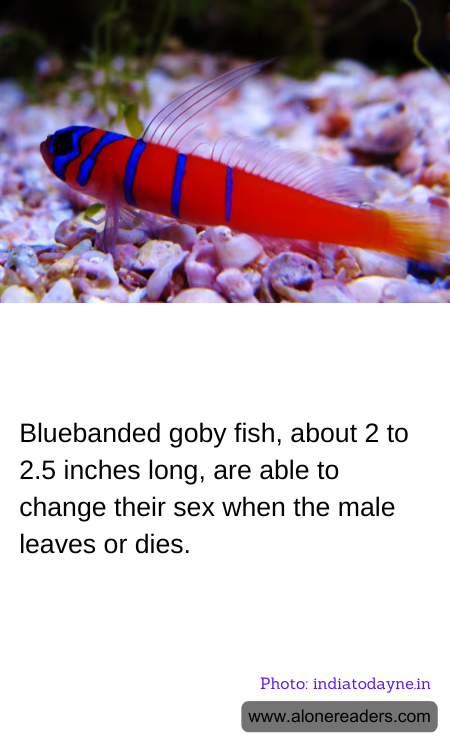
The bluebanded goby (Lythrypnus dalli) is a fascinating and colorful small fish that inhabits the rocky reefs and tide pools of the Pacific Ocean, particularly along the coast of California. These fish, typically measuring between 2 to 2.5 inches in length, are renowned not only for their striking blue bands but also for their remarkable ability to change sex under certain circumstances.
Sex change in animals, particularly fish, is known as sequential hermaphroditism. The bluebanded goby exhibits a form of this phenomenon known as protogynous hermaphroditism. In this social system, all bluebanded gobies initially mature as females. The dominant female of a group has the ability to transform into a male if the resident male dies or is otherwise removed from the group. This transformation involves both physiological and behavioral changes that enable the new male to mate and produce offspring.
The ability to change sex provides a significant evolutionary advantage. It allows for flexible and adaptive reproductive strategies in environments where mates are scarce or population densities are low. For the bluebanded goby, whose small size and specific habitat preferences might limit their ability to encounter numerous potential mates, this adaptability is crucial for the survival and propagation of their species.
Additionally, this sex-change capability ensures that a breeding male is almost always present in a group, maximizing the reproductive potential of the group. The new male quickly takes on the role of breeding with the females, ensuring that there is little interruption in the reproductive output of the group. This system not only exemplifies the plasticity of nature but also highlights the complex behaviors and adaptations that small marine species have developed to thrive in their environments.
The study of such unique behaviors in species like the bluebanded goby not only enriches our understanding of the natural world but also provides insights into the mechanisms of sex differentiation and social organization in animals.