More About This Card
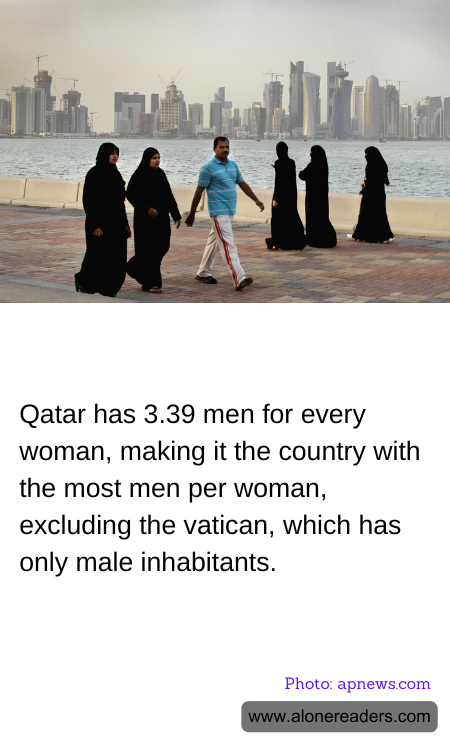
Qatar indeed stands out globally with a highly skewed gender ratio, where there are approximately 3.39 men for every woman. This significant demographic imbalance is primarily due to the influx of male laborers who migrate to Qatar from countries such as Nepal, India, and Bangladesh. These workers are predominantly employed in construction and other sectors pivotal to Qatar's expansive infrastructure projects, including preparations for major international events like the FIFA World Cup in 2022.
The gender disparity in Qatar is not mirrored in its native population but is starkly evident within the expatriate community, which constitutes about 88% of the country's total population. Female expatriates are considerably fewer because the recruitment strategies employed by labor-sourcing companies tend to favor male laborers for construction and industrial jobs, which demand a physically intensive labor force.
This demographic structure poses significant social challenges. For instance, it impacts the social integration processes and leads to imbalanced community life, with many male workers living without their families for prolonged periods. Moreover, the gender imbalance can complicate matters of compliance with international labor laws and standards, potentially affecting the social dynamics within the labor force.
Qatar's government and various international organizations have recognized these issues. Steps are being taken to improve the living conditions of laborers and to address the gender ratio by adjusting labor practices and recruitment policies. These efforts are part of broader human rights and labor reform initiatives, particularly as the international community closely watches Qatar following its World Cup preparations.
While the gender imbalance in Qatar represents a unique demographic scenario shaped by its economic and labor policies, it also reflects wider trends and challenges faced by other Gulf Cooperation Council (GCC) countries, where significant expatriate populations play a crucial role in national economies but also lead to complex social dynamics.