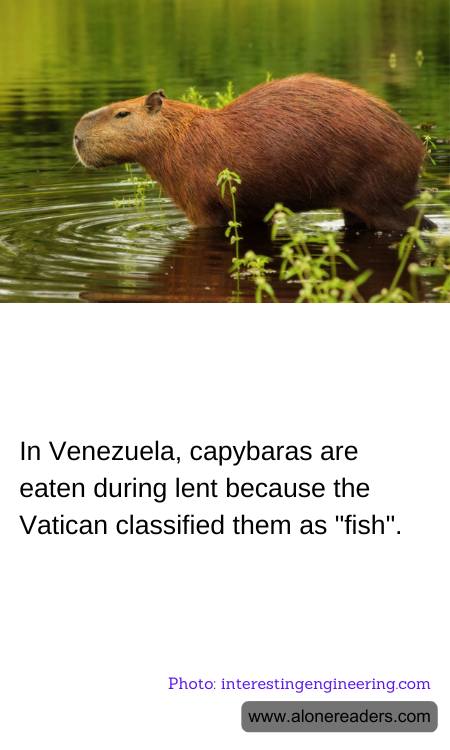
In Venezuela, the capybara, the world's largest rodent, finds itself at the center of a unique culinary tradition during the Lenten season. This South American mammal is aquatic and semi-aquatic, spending a substantial amount of time in water. Its aquatic lifestyle is pivotal to the unusual classification it received from the Vatican, which plays a direct role in its place on Venezuelan plates during Lent.
Traditionally, Catholics abstain from eating meat on Fridays during Lent, a period commemorating the 40 days Jesus spent fasting in the desert. Instead, fish becomes a common meal. However, in the 18th century, when missionaries ventured into the then-remote areas of Venezuela, alternatives were sought for local communities whose diet heavily relied on meat, including that of the capybara. Observing the capybara's significant time spent in water, these missionaries petitioned the Vatican to classify this mammal as a fish, a request that was granted.
This classification has had longstanding effects on Venezuelan culture and cuisine. During Lent, capybaras are legally consumed, even on days when meat is typically avoided. This practice highlights the adaptability of religious rules to regional and cultural differences. The capybara's meat, described as similar to pork but with a more fish-like texture when cooked, is incorporated into various traditional dishes. It is prepared in numerous ways, including frying, stewing, and grilling, often accompanied by local ingredients and spices that highlight its unique flavor.
Beyond its culinary aspect, the eating of capybara during Lent is a reflection of the blending of indigenous practices with European religious traditions. It underscores how local customs and ecologies can shape religious practices and dietary laws. Today, the consumption of capybara during Lent continues to be a cultural hallmark in Venezuela, celebrating both the country's rich biodiversity and its ability to integrate this into the Christian culinary calendar.
