More About This Card
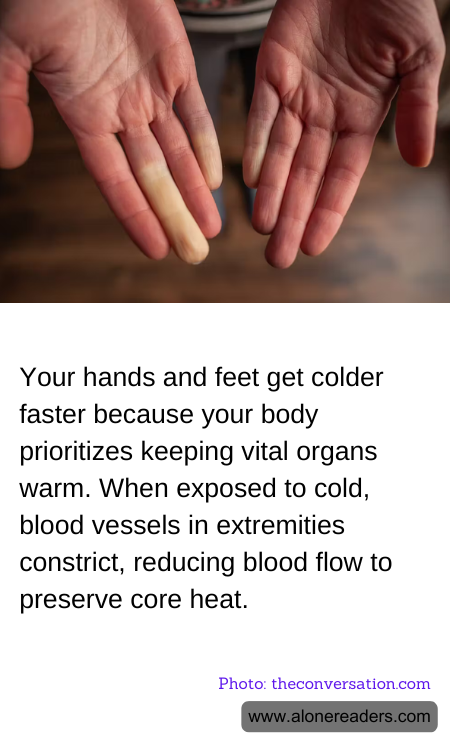
When exposed to cold temperatures, the human body instinctively implements survival strategies to protect vital organs and maintain core body heat. One of these strategies involves the constriction of blood vessels in the hands and feet, which are among the body's extremities. This physiological response, known as vasoconstriction, reduces blood flow to these areas to minimize heat loss and redirect blood towards the torso and vital organs, where it is crucial to sustain their optimal functioning.
This mechanism explains why our hands and feet tend to get cold much quicker than other parts of the body. It’s an adaptive response ensuring that the more critical regions, such as the brain, heart, and lungs, remain warm enough to perform their essential functions. Unfortunately, while this response is protective, it can be quite uncomfortable and sometimes risky, especially in extremely cold environments which can lead to frostbite and hypothermia if adequate protection and warmth are not available.
Additionally, the reduced blood flow and cooler temperatures in the extremities can make the nerve endings more sensitive, leading to feelings of numbness and tingling. This is why it’s particularly important to wear appropriate gloves, socks, and footwear that provide insulation when spending time in cold weather. Layering and proper clothing can help mitigate these effects by maintaining a more even body temperature and preventing excessive heat loss.
Moreover, individuals with certain health conditions such as Raynaud's phenomenon experience more pronounced effects from cold exposure. In Raynaud’s, the blood vessels in the fingers and toes can overreact to cold and stress, leading to severe constriction that markedly decreases blood flow, causing drastic changes in skin color and discomfort.
Understanding these physiological responses to cold not only helps in managing comfort and safety during the winter months but also underscores the complexity and efficiency of the human body's mechanisms to protect itself under varying environmental conditions.