More About This Card
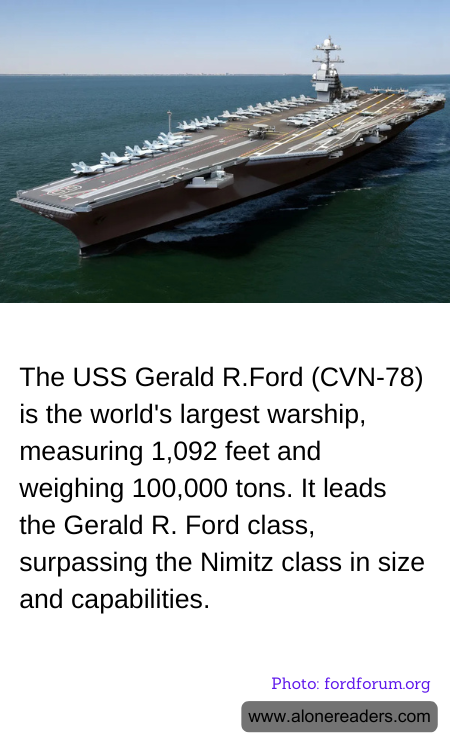
The USS Gerald R. Ford (CVN-78) stands as a monumental achievement in naval engineering, being the largest warship ever constructed. With a staggering length of 1,092 feet and a displacement of over 100,000 tons, this mammoth vessel eclipses its predecessors in both size and operational capabilities. As the lead ship of the new Gerald R. Ford class, it introduces a range of technological innovations designed to enhance the United States Navy's operational flexibility and combat readiness.
The advancements onboard the USS Gerald R. Ford are numerous and game-changing. Unlike the earlier Nimitz-class carriers, the Ford class incorporates new technologies such as the Electromagnetic Aircraft Launch System (EMALS) and Advanced Arresting Gear (AAG), replacing the traditional steam catapults and hydraulic arresting systems. These innovations provide smoother and more efficient operations, allowing for the launch and recovery of a broader array of aircraft types, including the latest generation of stealth fighters and unmanned drones. Additionally, the ship's enhanced flight deck design significantly increases its sortie generation rate.
Moreover, the USS Gerald R. Ford boasts a more refined nuclear propulsion system, which not only extends the vessel's operational range but also reduces maintenance requirements, enhancing the ship's endurance and time at sea. The integration of modern radar and sensor technologies further augments its role as a mobile command center, capable of orchestrating extensive naval operations and providing crucial support to joint forces across multiple domains.
In terms of crew accommodation, the design of the Ford class emphasizes crew comfort and efficiency, incorporating automation to reduce the required crew size, and thus operational strain, while improving overall living conditions. This aspect not only boosts morale but also enhances performance during prolonged deployments.
The USS Gerald R. Ford represents not just an evolution in carrier technology but also a significant shift in maritime strategy. It is designed to meet the varied demands of modern warfare and geopolitical challenges, projecting power with an unprecedented level of technological sophistication. As such, it sets a new standard for aircraft carriers and underscores the United States' continued commitment to maintaining its naval superiority on a global scale. The ship is not only a symbol of American military might but also a testament to innovation and forward-thinking in naval warfare strategy. As the USS Gerald R. Ford enters operational service, it paves the way for future developments in naval warfare, ensuring the U.S. Navy remains at the forefront of technological advancements and tactical readiness.