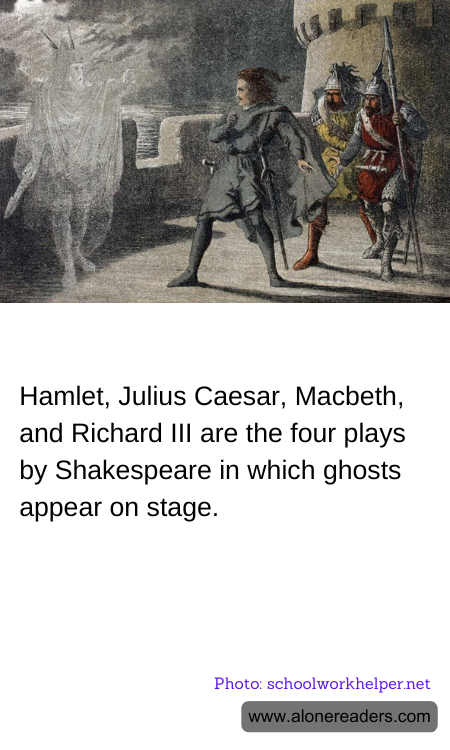
More About This Card
In William Shakespeare's expansive oeuvre, the supernatural notably bridges the mortal world with that of the spectral, delivering pivotal thematic and narrative functions. Among his plays, the apparitions marking "Hamlet," "Julius Caesar," "Macbeth," and "Richard III" not only enhance the dramatic tension but also deepen the exploration of themes such as guilt, fate, and the psychological torment of their key characters.
In "Hamlet," the ghost of Hamlet's father serves as a catalyst for the unfolding plot, appearing on stage to impel the young prince to avenge his untimely death, setting the tone for the play's exploration of vengeance, truth, and moral corruption. This spectral presence embodies both the literal and metaphorical specter that haunts Hamlet, driving his existential contemplations and actions throughout the play.
Similarly, in "Julius Caesar," the ghost of Caesar appears to Brutus to foreshadow his impending doom at the Battle of Philippi, symbolizing Brutus' guilt and the inevitable consequences of his betrayal. This ghost serves as a stark reminder of the moral and political ramifications of Caesar's assassination that ripple through the play.
"Macbeth" features arguably the most dramatic supernatural intervention with the appearance of Banquo's ghost. Manifesting at a royal banquet, the ghost confronts Macbeth with his guilt over the murder of his friend and comrade, shaking the foundations of his sanity and rulership. This haunting is a critical turning point that exacerbates Macbeth's paranoia and his descent into tyranny and despair.
In "Richard III," the ghosts of those whom Richard has murdered appear in a dream, each cursing him and prophesying his fall, symbolizing the weight of his accumulated sins and the justice that awaits him. This ghostly parade underscores the play's examination of the corrosive effects of unbridled ambition and the moral disintegration it engenders.
These ghostly presences in Shakespeare's plays are not mere stage effects; they are deeply integrated into the narrative structure and thematic fabric of the works. They amplify the emotional resonance of the plays, providing a spectral mirror to the conscience of the characters, intensifying their inner conflicts, and precipitating their ultimate fates. In doing so, Shakespeare uses the supernatural not just for thrilling his audience but for delving into the complexities of human motives and actions, blending the ethereal with the real to profound effect.