More About This Card
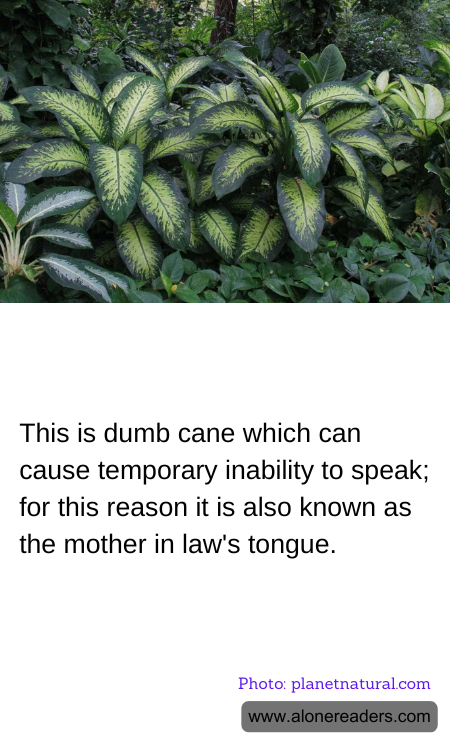
Dumb cane, scientifically known as Dieffenbachia, is a popular houseplant known for its striking, broad leaves and ease of care. However, along with its decorative appeal, the plant carries a lesser-known trait: it can potentially cause a temporary inability to speak if part of the plant is chewed, hence earning the nickname "mother-in-law's tongue" (though this name is more commonly associated with another plant, Sansevieria, also termed snake plant). This unusual effect is due to the presence of calcium oxalate crystals in the plant's leaves and stems. These needle-shaped crystals can irritate the mouth and throat, leading to swelling and a temporary loss of voice.
Dieffenbachia's mechanism of causing speechlessness is particularly interesting from a toxicological perspective. When chewed, the cells of the plant release these sharp crystals along with other compounds, which can cause a burning sensation, immediate pain, and inflammation. This can lead to difficulty in speaking and, in extreme cases, can obstruct the airway. However, serious injuries are rare as the pain and discomfort typically deter further ingestion of the plant material.
For households with pets or small children, it's particularly important to be aware of the potential hazards presented by the dumb cane. Although it is a beautiful addition to home decor, placing it out of reach can prevent accidental contact with its harmful parts. Ingestion should be treated seriously, and medical advice should be sought immediately to manage the effects adequately.
In addition to its potential risks, dumb cane contributes positively to indoor environments. Like many houseplants, Dieffenbachia filters airborne toxins and enhances indoor air quality. It thrives in well-lit, humid conditions but can tolerate lower light, making it versatile for various indoor settings. Regular watering and occasional feeding will keep it healthy and vibrant.
Therefore, while the dumb cane is undeniably appealing as a houseplant, awareness and caution about its toxic properties are crucial. Proper handling and placement can help ensure that its beauty can be safely enjoyed without risking the health of household inhabitants.