More About This Card
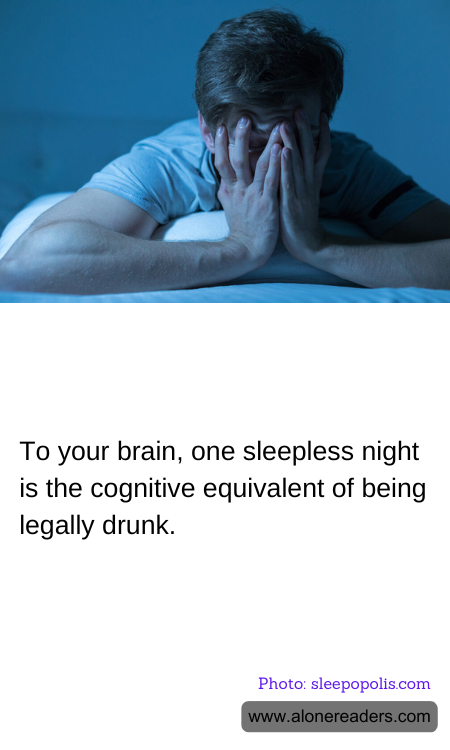
Going without sleep for just one night can have effects on your brain similar to those you would experience if you were legally drunk. This comparison emphasizes the significant impact that sleep deprivation can have on cognitive functions such as memory, concentration, and decision-making. Sleep is crucial for various brain processes, including the consolidation of memories and the removal of toxins that accumulate during waking hours.
When sleep is neglected, even just for a single night, the body misses out on these essential processes. Research indicates that after 17 to 19 hours without sleep, individual performance on a range of tasks is equivalent or worse than that of a person with a blood alcohol concentration (BAC) of 0.05 percent. This is close to or at the legal limit for drunk driving in many countries, which typically falls around 0.08 percent. The impairment includes but is not limited to problems with executive functions such as multitasking, remembering details, and paying attention.
Sleep deprivation causes a decrease in cognitive abilities by disrupting the function of the prefrontal cortex, the area of the brain responsible for high-level thinking, decision-making, and social behavior. This disruption results in slower reaction times and reduced ability to process information. Studies have also shown that people who are sleep-deprived are more prone to making poor decisions, taking unreasonable risks, and are less able to adjust to changing circumstances.
The comparison between sleeplessness and being drunk is a meaningful illustration of the risks of impaired cognition. Just like alcohol, lack of sleep can lead to serious accidents and mistakes. For instance, driver fatigue due to lack of sleep is a known risk factor for vehicular accidents.
This stark reality underscores the importance of prioritizing sleep as a fundamental aspect of health and safety. Understanding the parallel between sleep deprivation and alcohol impairment can help highlight the necessity for adequate rest and perhaps encourage more people to make a conscious effort to get a good night's sleep consistently. It is essential not just for cognitive and physical performance, but for overall well-being.