More About This Card
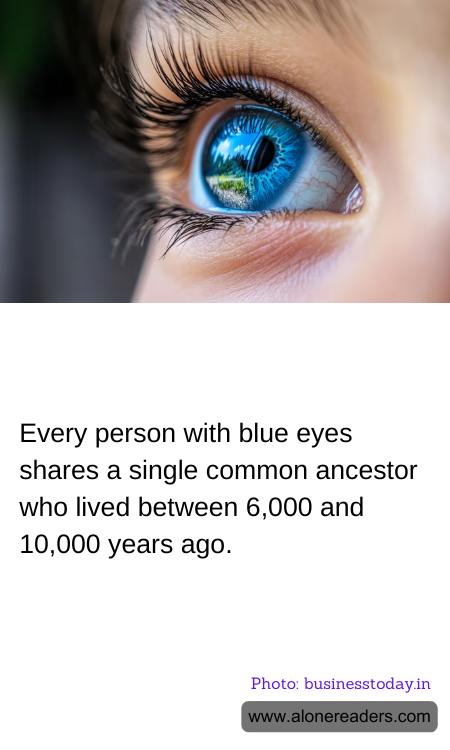
The intriguing phenomenon of blue eyes in humans is traced back to a genetic mutation that occurred between 6,000 and 10,000 years ago. Before this mutation, all humans had brown eyes, according to genetic researchers. The mutation affected the OCA2 gene, which is involved in the production of melanin, the pigment that gives color to our eyes, hair, and skin. This particular mutation does not completely stop the production of melanin but rather reduces it in the iris, thereby diluting brown eyes to blue.
The first person with this mutation likely lived near the Black Sea region, in what is now modern-day Turkey. Geneticists theorize that the mutation may have offered some advantage or was simply deemed attractive, leading to a greater likelihood of producing offspring, and thus the spread of blue eyes across Europe and later to other parts of the world. The spread of blue eyes is a fascinating example of how a single genetic trait can proliferate across continents.
This genetic anomaly means that all blue-eyed individuals today share a common ancestor. This fact illustrates the interconnected nature of human beings. It is a remarkable testament to the subtle yet profound role of genetics in our phenotypic variations. Studies of mitochondrial DNA, which is passed from mother to offspring, support this lineage, showing that people with blue eyes share common ancestry in a relatively small gene pool.
Understanding the genetic origins of eye color not only sheds light on human migration and adaptation but also enhances our understanding of how genetic mutations can bring about variation within a species. It also contributes to the broader discussions in genetic research regarding the traits and characteristics influenced by genetics, offering insights into how humans continue to evolve over generations.