More About This Card
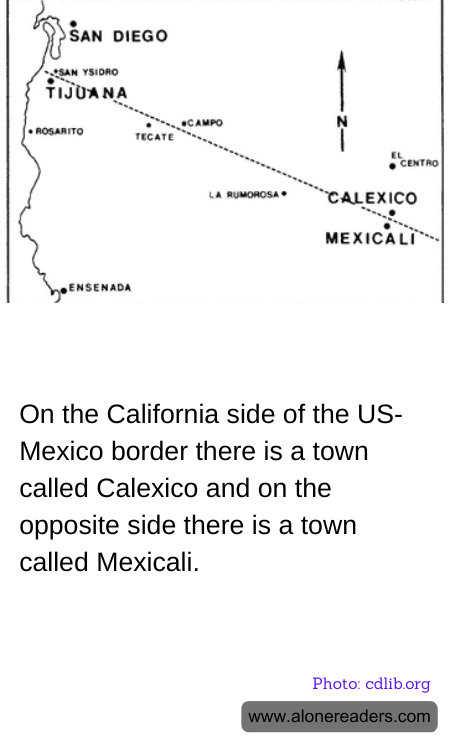
Nestled along the US-Mexico border, the twin cities of Calexico and Mexicali present a fascinating study in international urban symbiosis. Calexico, located in California, USA, and Mexicali, situated in Baja California, Mexico, share more than just a border; they share cultural, economic, and social ties that make them unique in the realm of cross-border relationships.
Calexico, with its name derived by blending "California" and "Mexico," signifies the blend of cultures and economies. As the northern gateway, this town functions mainly as a residential area and is significantly influenced by its closeness to Mexicali. The town benefits economically mainly through commercial and industrial aspects driven by border trade and the movement of goods and people. Notably, retail businesses in Calexico often cater to the needs of visitors from Mexicali, who frequently cross to shop or visit family, leveraging the economic disparity between the two nations.
Mexicali, on the other hand, is the capital city of the state of Baja California and is larger and more industrially active compared to its American counterpart. It hosts a vibrant economy based on manufacturing, agriculture, and assembly plants (maquiladoras) that export goods into the United States. The city is culturally rich, often celebrated for its Chinese-Mexican cuisine, a testament to its historical waves of Chinese immigrants, and its robust local beer brewing scene.
The interaction between Calexico and Mexicali extends beyond economics and culture. Education and healthcare see cross-border integration, with many residents of Mexicali attending schools and seeking medical services in Calexico and vice versa. The familial ties that stretch across the border also contribute to a significant bi-national lifestyle, where families are often split between the two countries, celebrating holidays and maintaining traditions that blend their American and Mexican heritages.
Despite the robust exchange and interdependence, living on the border comes with its set of challenges, including security issues, the complexities of immigration policy, and the environmental concerns linked to industrial pollution and resource management. Both Calexico and Mexicali face these issues head-on, working collaboratively to find solutions that benefit residents on both sides of the border.
In conclusion, Calexico and Mexicali exemplify how border towns can evolve into closely knit communities that embody the strength of their two nations, creating a shared space that respects and celebrates both their differences and similarities. Their ongoing relationship provides valuable insights into the dynamics of international borders, offering a model of cooperation and mutual benefit.