More About This Card
Australia is home to a remarkably hazardous plant known as the Gympie-Gympie (Dendrocnide moroides), which has garnered a notorious reputation for its excruciating sting. Found predominantly in the rainforest areas of northeastern Australia, this plant is one of the most venomous and dangerous in the world.
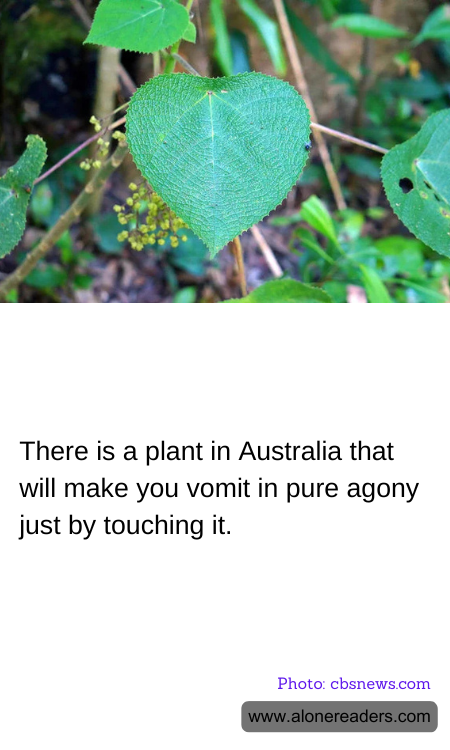
The Gympie-Gympie looks innocent enough, with its heart-shaped leaves and fluffy appearance, but touching it is a grave mistake. It's covered in fine, hair-like needles capable of delivering a neurotoxin that can cause overwhelming pain lasting for days or even months. The pain is described as being unbearably agonizing and has been likened to being burnt with hot acid and electrocuted simultaneously.
The sting from the Gympie-Gympie is not only intensely painful but can also lead to symptoms like vomiting, swelling, and an increased heart rate, complicating the initial agony. In some severe cases, the effects have led to hospitalization. The microscopic silica-tipped hairs of the plant embed themselves in the skin upon contact, which then break off and make the removal difficult. These hairs can remain embedded and continue to release poison for a considerable length of time, prolonging the victim's suffering.
The dangers of the Gympie-Gympie have been known among the indigenous communities and those living in close proximity to its habitat for hundreds of years. However, it remains a subject of interest and caution for scientists and tourists who visit these regions. Handling or working near this plant requires wearing thick gloves and protective gear, and even then, extraordinary care must be taken.
Removal of the stinging hairs can be difficult, and treatment usually involves applying diluted hydrochloric acid or waxing the affected area to pull out the embedded hairs. Despite the awareness of its painful sting, accidental encounters with the Gympie-Gympie still occur, primarily with unwary tourists or researchers.
This plant serves as a formidable reminder of the hidden dangers that can lurk in natural settings, suggesting a respect for local flora and careful consideration while traversing through less familiar terrains. Hence, the Gympie-Gympie plant is more than a curiosity; it's a stark symbol of nature's untamed power, underscoring the balance between natural beauty and inherent risk.