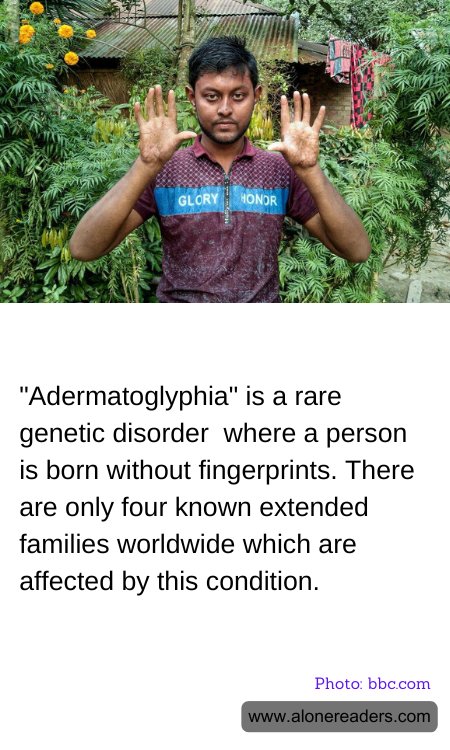
Adermatoglyphia is an extremely rare genetic condition, characterized by the absence of fingerprints. This condition has been informally named "immigration delay disease" due to the challenges it poses in activities that require fingerprint identification. There are only a few known cases affecting about four extended families globally, making it a subject of interest and research in genetic studies and dermatology.
The genetic anomaly responsible for adermatoglyphia is typically inherited in an autosomal dominant pattern. This means only one copy of the mutated gene is needed for a person to exhibit the trait. The condition results from a mutation in the SMARCAD1 gene, which plays a crucial role in skin development and the formation of dermatoglyphs - the ridges on the skin of the fingers and toes.
Individuals with adermatoglyphia have smooth fingertips and are often first noticed at border crossings or in legal contexts where fingerprint identification is required. Besides the absence of fingerprints, affected individuals generally do not exhibit other symptoms or health issues directly related to the condition. However, some cases have reported a reduced number of sweat glands in the hands, potentially affecting perspiration.
Research into adermatoglyphia not only helps in understanding the genetic basis of fingerprint formation but also has broader implications in dermatology and forensic science. Understanding why the fingerprints do not form in individuals with this mutation can provide insights into various skin conditions and disorders. Additionally, studying such rare genetic conditions helps broaden our understanding of human genetic diversity and the impact of specific genetic mutations on phenotypic expression.
Despite its rarity, adermatoglyphia poses unique challenges in the modern world, where biometric data plays an increasingly important role in security and identification. It underscores the need for diverse methods of identity verification that can accommodate rare conditions without compromising personal and national security. The intriguing nature of adermatoglyphia remains a key area of interest, with ongoing research aimed at uncovering more about this unusual genetic phenomenon.
