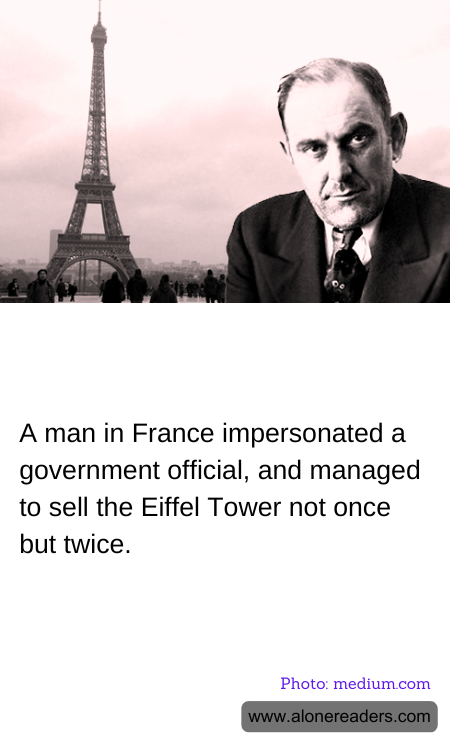
In one of the most audacious cons in history, Victor Lustig, a man of Czech descent, successfully "sold" the Eiffel Tower to unsuspecting buyers not once, but twice. This remarkable event happened in the early 20th century, capitalizing on the era's communication limitations and the greed and gullibility of buyers.
Victor Lustig was a gifted linguist and master con artist who traveled frequently between France and the United States. His scheme began to take shape in 1925, amid rumors that the Eiffel Tower was in disrepair and becoming too expensive for the city of Paris to maintain. Seizing on these rumors, Lustig forged government credentials and invited six scrap metal dealers to a confidential meeting. He presented himself as the deputy director-general of the Ministère de Postes et Télégraphes and discussed a government decision, made in strict secrecy, to tear down the Eiffel Tower and sell it for scrap.
Playing on the prestige of the alleged government role and the believability of his proposal, Lustig created an atmosphere of urgency to motivate the scrap dealers. He knew that the first rule of a good con is to make the opportunity sound both plausible and quick, requiring immediate action. One of the dealers, André Poisson, was convinced enough to pay a handsome bribe for the rights to demolish the tower and take possession of the tons of metal it would yield. Poisson, embarrassed upon realizing the scam, decided against going to the police for fear of public humiliation.
The audacity of this con perhaps points to both the charm and cunning of Victor Lustig and the gullible zeitgeist of the times. Remarkably, Lustig returned to Paris not long after his initial success and attempted the same scam again. Although the second attempt was less successful, the sheer nerve to try it a second time cements his legacy as one of the most brazen swindlers of his day.
Eventually, Lustig's criminal career ended when he was captured and imprisoned in the United States. He died in Alcatraz prison in 1947. His exploits, especially the sale of the Eiffel Tower, remain a popular anecdote in discussions about psychological manipulation and con artistry. They serve as a fascinating reminder of how charisma, fast talk, and a well-tailored suit can sometimes rewrite reality, if only for a short while. The Eiffel Tower scheme remains one of the most unbelievable yet true cons in the annals of crime history.
