More About This Card
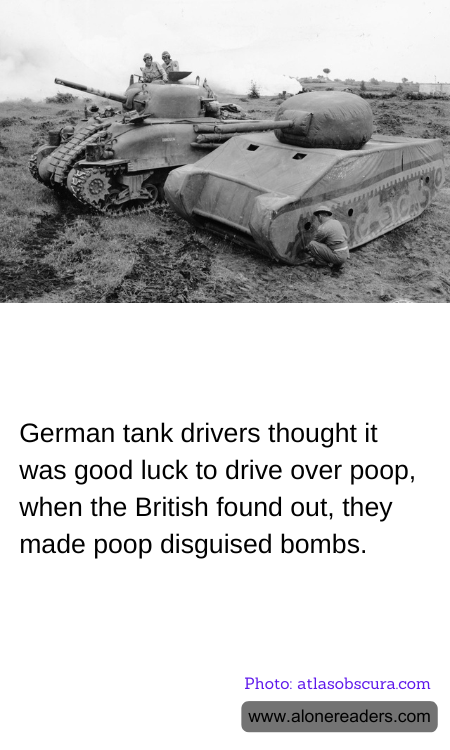
During World War II, espionage and deception played significant roles on all fronts, as the warring nations continually sought ways to outsmart each other. One peculiar, yet inventive tactic involved the exploitation of superstitions and habitual behaviors. It is said that German tank drivers held a superstition deeming it good luck to drive over animal droppings on the battlefield. This belief might have stemmed from old folk beliefs or simply from an attempt to make light of the grim realities of war.
The British, ever resourceful in psychological and unconventional warfare, reportedly decided to capitalize on this superstition for tactical advantage. They began developing explosive devices disguised as animal feces. These were intentionally scattered in areas where German tanks were known to operate. The concept was straightforward yet cunning: the disguised explosives would blend seamlessly with the environment, reducing suspicion and thereby increasing the likelihood of triggering the devices by the unsuspecting tank crews chasing luck.
This tactic is an example of a broader strategy known as "passive" or "environmental" booby traps, where the environment itself becomes a part of the warfare. It emphasizes the ingenuity and creativity military forces have employed throughout history to gain a strategic edge. Moreover, it showcases the psychological aspect of warfare, where understanding and manipulating the mindset and beliefs of the enemy can lead to opportunities to strike effectively.
Though detailed historical verification of the widespread use of such booby traps may be scant, the story underlines the lengths nations would go to during the war. From inflatable tanks to fake radio transmissions, WWII was as much a war of wits and deception as it was a vast clash of physical might. The poop-disguised bombs, whether widely used or not, symbolize this cunning side of war where not even superstitions were safe from exploitation.