More About This Card
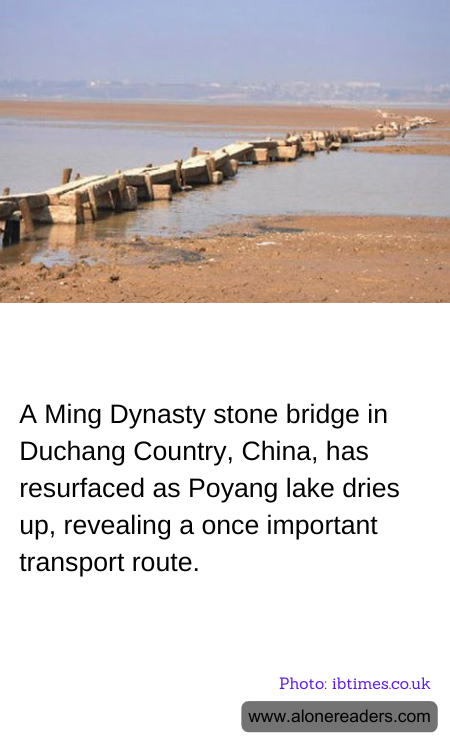
The fascinating reappearance of a Ming Dynasty stone bridge in Duchang County, as Poyang Lake's water levels recede, has captivated historians and locals alike. This ancient structure, submerged for decades, once served as a crucial transportation link across one of China's largest freshwater lakes. Its resurfacing is a stark reminder of the historical treasures that lie beneath the surface, silently witnessing the passage of time.
Constructed during the Ming Dynasty, which ruled from the 14th to the 17th century, the bridge is an architectural relic that offers insights into the period's engineering practices and transportation logistics. The design and sturdiness of the bridge speak volumes about the Ming Dynasty’s advanced understanding of infrastructure development, important for both economic activities and the mobility of people and goods.
The recent drought conditions leading to the lake's receding waters have brought this hidden gem back into the public eye. This phenomenon raises both interest and concern, highlighting the impacts of climate change and environmental management on historical sites. As the bridge becomes temporarily accessible, it has attracted scholars and tourists, eager to explore its historical context and architectural beauty.
For locals, the bridge is more than just an ancient structure; it is a piece of their collective memory and heritage. Elderly residents of Duchang County recall tales passed down through generations, where the bridge symbolized connectivity and prosperity. Its emergence has rekindled local interest in the area's history and encouraged discussions about the preservation of such sites amid changing environmental conditions.
The resurfaced bridge is not only a testament to the ingenuity of past civilizations but also serves as a poignant reminder of the dynamic interplay between nature and human history. As researchers and conservationists converge on the site, they are reminded of the need to develop strategies that will both preserve and honor this historical legacy amidst ongoing ecological challenges.