More About This Card
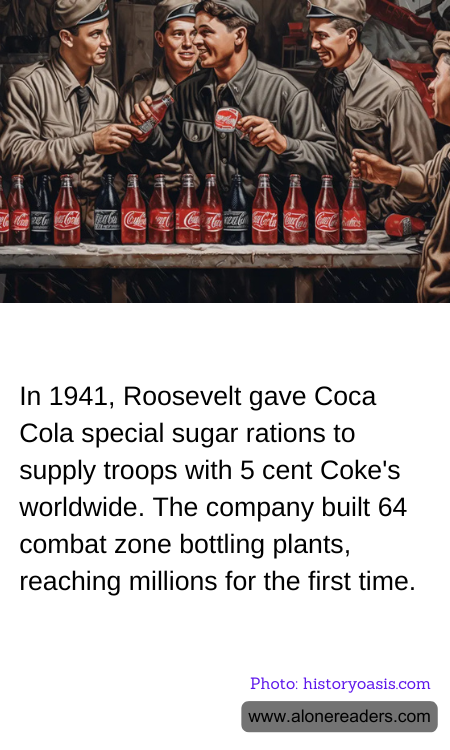
In 1941, amidst the tumult of World War II, President Franklin D. Roosevelt made a strategic yet culturally poignant move: he granted The Coca-Cola Company special access to sugar rations. This decision aimed not just to keep the beloved beverage in production, but more importantly, to ensure American troops overseas could purchase a bottle of Coke for just five cents, wherever they were stationed. The psychological boost this provided to the troops was invaluable; a taste of home while fighting abroad.
The logistical challenges were immense, yet Coca-Cola responded by establishing 64 bottling plants in various combat zones around the world. This rapid expansion was not only a technical marvel, leveraging the global logistical networks of the war, but also a massive marketing boon for Coca-Cola. For the first time, millions of people around the globe were introduced to this quintessentially American drink, linking Coca-Cola indelibly with the American way of life in the minds of both soldiers and local populations.
This strategic move by both Roosevelt and Coca-Cola marked a pivotal moment in global corporate history. It demonstrated the power of branding alongside a deep understanding of cultural morale. Wars are fought not only on battlefields but within the hearts and minds of those involved. By sipping on a Coke, soldiers were momentarily transported back to the comfort of their own homes, bolstered by the familiar sweet flavor. Meanwhile, Coca-Cola secured its place as a global icon, forever associated with the American effort in World War II. The initiative also set a precedent for how corporations could support war efforts, showing that contribution can come in various forms—not just through manufacturing and raw materials, but also through providing comfort and a reminder of what was being fought for. This act of corporate partnership with the military during a critical period went a long way in establishing Coca-Cola’s expansion worldwide, making it one of the most recognized brands globally.