More About This Card
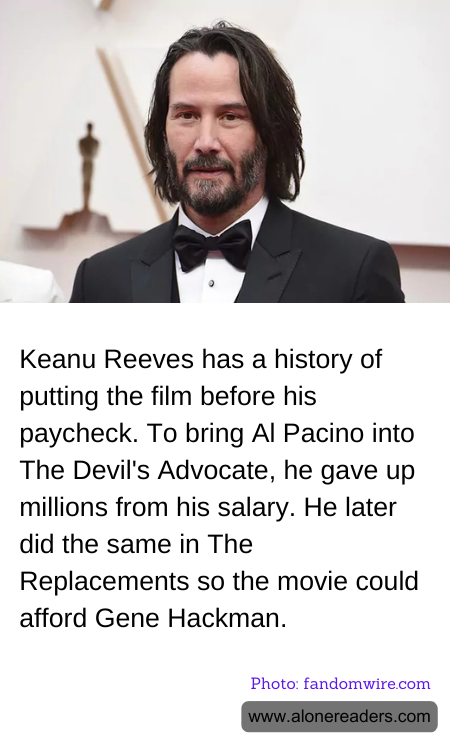
Keanu Reeves is well-known not only for his compelling performances on screen but also for his selfless financial decisions off-screen, often prioritizing the success of his films over his personal gain. This attitude was notably demonstrated during the production of two major films where he significantly adjusted his salary to accommodate the inclusion of fellow esteemed actors.
In 1997, during the production of "The Devil's Advocate," Reeves made a substantial financial sacrifice to ensure that the film could accommodate the casting of Al Pacino. Recognizing the value Pacino would bring to the film, Reeves reportedly gave up millions of dollars from his salary. This move not only helped in securing Pacino, who played the pivotal role of John Milton, Satan in disguise, but also contributed to the film’s overall success, both critically and at the box office. The legal thriller, directed by Taylor Hackford, explores themes of morality and ambition, and Pacino’s performance was central to its dark, dramatic overtones.
Reeves’ generosity did not stop with "The Devil's Advocate." In 2000, he repeated his noble financial gesture during the making of "The Replacements," a sports comedy directed by Howard Deutch. The film required the casting of another legendary actor, Gene Hackman, to play the seasoned coach leading a team of replacement players during a pro football strike. Again, to accommodate the film’s budget for such a high-profile addition, Reeves cut his salary. This decision helped secure Hackman’s involvement, which was crucial for bringing a level of gravitas and authenticity to the movie, enhancing its reception and success among audiences.
These instances highlight a pattern in Reeves’s approach to his work in the film industry—a rare willingness to put the quality and integrity of the project above his financial interests. His actions reflect a broader perspective where the overall outcome of the project and the collaborative spirit of the cast are more important than individual gains. This altruistic approach, unusual in Hollywood, not only endears him more to his colleagues and filmmakers but also to his fans worldwide, reinforcing his reputation as one of the most likable and humble actors in the industry. Beyond his box office appeal, Reeves's commitment to the art of filmmaking and his exceptional collaborations continue to define his long-standing career.