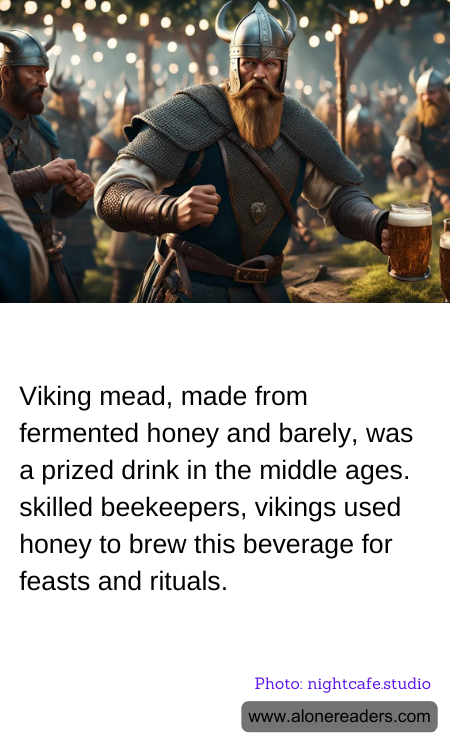
More About This Card
Mead, often referred to as the nectar of the gods, holds a venerable place in Viking culture, encapsulating not just a beverage but a storied artifact of ritualistic and social significance during the medieval era. Crafted predominantly from fermented honey, water, and sometimes with the addition of barley, fruits, or spices, mead was more than a mere drink—it was a centerpiece at celebrations, a token of hospitality, and an offering in spiritual and ceremonial rites.
Viking mead varied in sweetness, potency, and complexity depending on the ingredients and fermentation methods employed. The derivation of its primary ingredient, honey, highlights the importance of beekeeping in Viking society—a sophisticated practice that required significant skill and knowledge about the behavior of bees and the seasonal influences on their productivity. This connection to beekeeping underscores the Vikings' deep relationship with nature and their dependence on its cycles and resources.
Highly valued, mead was traditionally consumed during large gatherings and communal feasts, which were pivotal elements of Viking social life. These events served not just to maintain alliances but also to forge new ones. The communal passing of a mead horn, from which many would drink, symbolized unity and trust among the participants. This ritual sharing also extended into Viking religious practices, where mead was often used in offerings to the gods and during ceremonial pledges.
Furthermore, this golden beverage was enveloped in myth and legend, imbued with properties that were believed to bestow wisdom and poetic inspiration. The Norse sagas and poems often extol mead's virtues, portraying it not only as a drink of the earthly realm but also as a revered element in the domain of the gods, such as in the tale of the Mead of Poetry. This myth tells of a magical mead brewed from the blood of the wise being Kvasir, which imparts the gift of poetry to anyone who drinks it.
Today, the legacy of Viking mead continues to enchant and inspire, with modern breweries and enthusiasts seeking to recreate the traditional recipes and to imbibe a taste of the mystique and aura that this storied drink carries with it. Reviving and participating in the ancient traditions of mead brewing and consumption not only celebrates the rich cultural tapestry of the Vikings but also provides a sip of history infused with the flavors of the past.