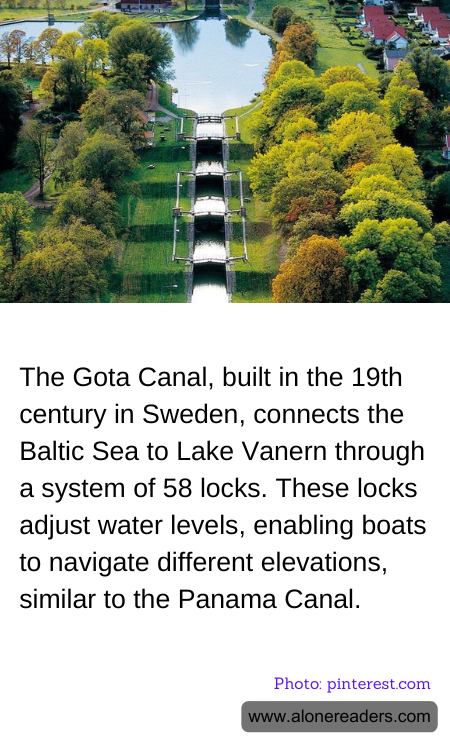
The Gota Canal, one of Sweden's most significant engineering feats of the 19th century, still stands as a monument to human ingenuity and determination. Completed in 1832, this 190-kilometer-long waterway stretches from Sjötorp on Lake Vänern to the Baltic Sea at Mem. The canal's construction was a massive endeavor led by Baltzar von Platen, a visionary who saw the potential in creating a direct water route across Sweden. This route dramatically increased the efficiency of goods and passenger transportation, ultimately boosting the Swedish economy.
Featuring 58 locks, the canal allows boats to traverse the substantial elevation difference between the Baltic Sea and Lake Vänern, which is about 44 meters. These locks operate on a system that either raises or lowers the water level in enclosed chambers, enabling boats to move smoothly between different heights, much like the more globally renowned Panama Canal. One of the most picturesque sections of the canal is the Berg locks, a flight of seven connected locks that lift boats over a considerable vertical distance.
Besides its practical purposes, the Gota Canal has become a significant tourist attraction. It offers a tranquil and scenic passage through Sweden's verdant landscapes, dotted with historic sites, charming villages, and a myriad of leisure activities from cycling alongside the towpaths to kayaking in the calm waters. During the summer months, vintage boats take visitors on leisurely cruises, providing a glimpse into the slow pace of life of yesteryears and showcasing Sweden's commitment to preserving and celebrating its heritage. The canal serves not only as a link in Sweden's transportation system but also as a beloved national landmark, embodying both historical significance and natural beauty. Its creation, an arduous feat using predominantly manual labor, reminds us of the transformative power of human endeavor.
