More About This Card
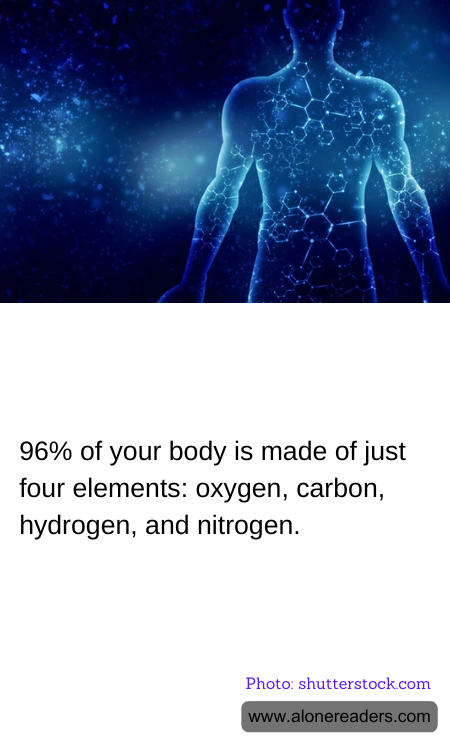
Nearly all of the human body is composed of just four elements: oxygen, carbon, hydrogen, and nitrogen, which together make up 96% of our body weight. These elements are the building blocks of life, each playing a critical role in the body's structure and functions.
Oxygen is the most abundant, comprising about 65% of the body's mass. It's essential for cellular respiration, where the body converts glucose and oxygen into energy, carbon dioxide, and water. This process is fundamental not only for producing energy to power biological functions but also for maintaining basic life processes.
Carbon constitutes approximately 18% of the body and is the backbone of all organic molecules. This element is central to the structure of cells and is a pivotal component of DNA, proteins, fats, and carbohydrates. It essentially holds the blueprints and operational tools for life, playing a crucial role in cellular function and the overall structure of the body.
Hydrogen, which constitutes about 10% of the body mass, also plays multiple roles. It is involved in the structure of water molecules, as well as in most of the body's organic compounds. Hydrogen ions, or protons, are central to the body's regulatory system for maintaining pH balance, and they play a key role in energy production within the cell's mitochondria.
Nitrogen, making up around 3% of the body, is a major component of amino acids, the building blocks of proteins. Proteins are necessary not just for structural support and the repair of tissues but for the proper function of all cells and organs. Furthermore, nitrogen is an essential part of the nucleic acids DNA and RNA, which are responsible for genetics and protein synthesis within the cells.
The interplay of these elements reflects the complex yet fascinating efficiency of the human body. Understanding the roles these elements play not only demystifies biological functions but also enhances our appreciation for how life is sustained at a molecular level. While these four elements are abundant, their meticulous organization and interaction facilitate life in a way that is unique to organic organisms. Their configurations and the ways in which they bond and react result in the diversity of biological processes necessary for life.