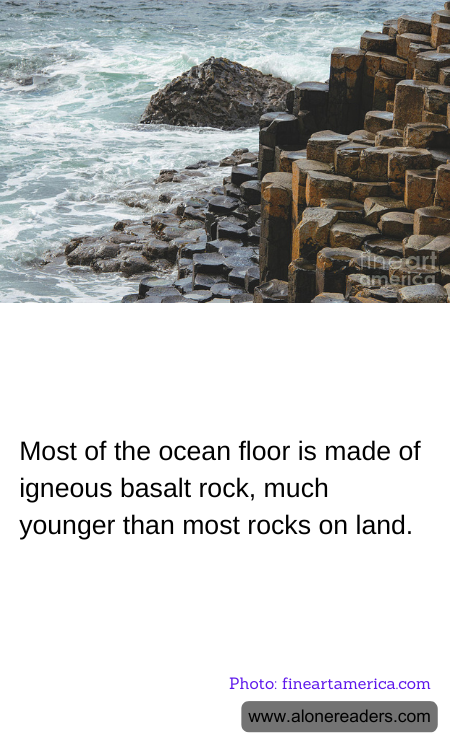
The ocean floor presents a vastly different geological landscape compared to what we see on land. Predominantly composed of basalt, a type of igneous rock, it forms through the cooling and solidification of magma beneath the Earth's surface. Basalt is specifically prevalent at mid-ocean ridges where tectonic plates are pulling apart and allowing magma to rise and spread, creating new oceanic crust.
This process at the mid-ocean ridges is known as seafloor spreading. As magma reaches the surface of the Earth beneath the ocean, it cools rapidly due to the cold ocean water, forming new basaltic crust. This constant addition and cooling of magma at the mid-ocean ridges make the ocean floors some of the youngest geological features on our planet, in stark contrast to the much older continental rocks formed by complex geological processes over millions of years.
The youth of the ocean floor is further evidenced by its structure and topography. The oldest oceanic crust is about 200 million years old, found in the western Pacific and off the coast of eastern North America. In comparison, some of the oldest continental rocks are around 4 billion years old. This difference in age is primarily due to the process of subduction, where the oceanic crust, being denser, eventually sinks back into the mantle under continental plates or younger oceanic plates, effectively recycling itself.
Furthermore, the basaltic composition of the ocean floor contributes significantly to oceanic processes and marine ecosystems. Basalt is rich in iron and magnesium, and when it weathers, it releases nutrients that are vital for marine life. Additionally, the rough, porous nature of basalt provides an ideal habitat for many marine organisms, playing a critical role in the biodiversity of the ocean ecosystems.
Understanding the composition and formation of the ocean floor not only clarifies the dynamic nature of Earth's geology but also highlights the interconnectedness of geological processes and life on Earth. The exploration of these underwater landscapes continues to reveal the secrets of Earth's interior and contributes to our broader understanding of environmental and ecological dynamics.
