More About This Card
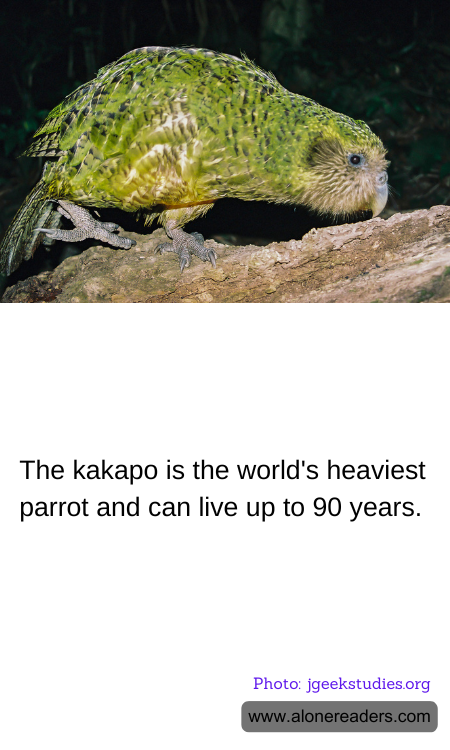
The kakapo, or Strigops habroptilus, also known affectionately as the “night parrot” or “owl parrot,” is truly one of nature’s marvels. Native to New Zealand, this bird has several distinctive features that set it apart from other parrots, not the least of which is its astounding weight, making it the world's heaviest parrot. Unlike typical parrots, the kakapo can weigh up to about 4 kilograms. Adding to its uniqueness, the kakapo is a flightless bird, a trait that stems from an evolutionary history devoid of mammalian predators, where it once roamed freely and without threat.
The kakapo is notable not only for its size and lack of flight but also for its longevity. These birds can live up to 90 years, a lifespan that is exceptionally long among birds and contributes to its unique lifecycle. This longevity is paired with a very slow reproductive rate; females breed only every two to four years, and often only when certain native plants are fruiting which provides the necessary nutrition for raising young. This infrequent breeding contributes to the challenges in increasing their population numbers.
Tragically, despite their fascinating nature, kakapos are critically endangered. Human colonization and the introduction of predatory mammals such as cats, rats, and stoats nearly wiped out the species entirely. By the 1990s, only about 50 kakapos remained, sparking intense conservation efforts. These efforts include meticulous monitoring, a recovery program that involves relocating all known kakapos to predator-free islands, and managing their breeding program to maximize genetic diversity.
Conservationists maintain hope with every successful breeding season. Each new chick is a significant victory, celebrated amongst those dedicated to preserving this unique species. The conservation program not only focuses on increasing population numbers but also aims at eventually reintroducing the kakapos back into their natural habitat, provided these areas can be secured against predators.
The kakapo serves as a symbol of both the fragility and the resilience of our natural world. Its precarious position at the brink of extinction highlights the profound impact humans have on other species, while the strenuous efforts of conservationists demonstrate humanity’s capacity for rectifying past mistakes. As such, the future of the kakapo remains uncertain, balanced between the dangers of what has already been lost and the hope of what might yet be saved. With continued support and attention, this remarkable bird may continue to walk the forests of New Zealand for many more decades to come.