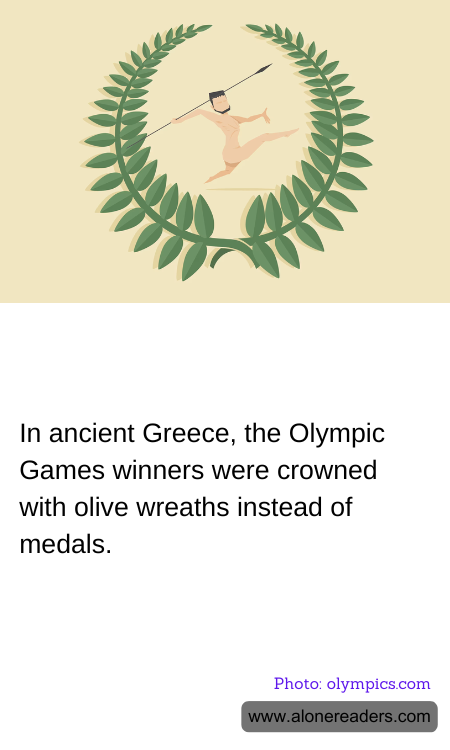
The ancient Olympic Games, a pivotal tradition in Greek culture, held great significance, transcending mere athletic competition. Unlike today’s contests marked by gold, silver, and bronze medals, the victors in the ancient Greek Olympics were crowned with wreaths made from olive branches. These wreaths, known as "kotinos," were not only symbols of victory but also of peace and honor.
The olive tree from which the wreaths were crafted had deep roots in Greek mythology and culture. According to legend, it was the goddess Athena who gifted the olive tree to the city of Athens, and consequently, the tree became a symbol of peace and prosperity. The crowning of the athletes with an olive wreath was thus symbolic, linking them not only to the divine favor of the gods but also embedding them into the cultural and spiritual fabric of Greek life.
The process of crowning the Olympic champions was ceremonial and revered. The wreaths were made from the branches of a sacred olive tree that grew behind the temple of Zeus in Olympia—the very heart of the Olympic Games. This tree was known as the "Kallistephanos." After a victory, the athlete was honored with the kotinos and a palm branch while the spectators cheered and threw flowers. The moment was poignant, focusing on the glory and virtue of the winner rather than material wealth, which speaks to the values of ancient Greek society.
These athletes, hailed as heroes, gained immense prestige and were often rewarded richly by their home cities. Their victories were celebrated with poems, statues, free meals, and even front-row seats in theaters. However, the kotinos itself was considered the highest honor, a mark of distinction that symbolized excellent physical prowess, honor, and the gods’ favor.
The tradition of crowning Olympic champions with olive wreaths lasted until about 394 AD, when Roman Emperor Theodosius I abolished the games. This act was part of a larger effort to establish Christianity as the Empire’s sole state religion, thereby eliminating what were seen as pagan rituals.
Despite their discontinuation in antiquity, the ethos of the ancient Games and their unique rewards live on, retaining a romantic appeal that continues to inspire and fascinate. The modern Olympic Games have even paid homage to this ancient tradition by incorporating the olive branch in various symbols and during the medal ceremonies, like those in Athens in 2004, thus bridging centuries of athletic honor and cultural heritage.
