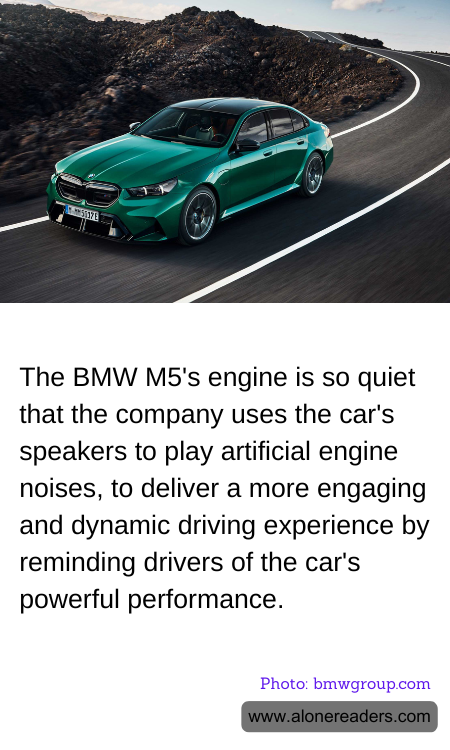
More About This Card
The BMW M5, a high-performance variant of the BMW 5 Series, is renowned for its powerful engines and superior driving dynamics. Interestingly, despite its brawn, the M5’s engine is exceptionally quiet, a characteristic that stands in contrast to the roaring engines typically expected in high-performance sports cars. To address this, BMW has implemented an innovative solution that uses the car’s audio system to enhance the auditory experience of driving.
BMW's approach involves playing artificial engine noises through the car's speakers. This is not simply about adding noise for the sake of noise; rather, it's about enhancing the emotional engagement between the car and the driver. The sound played through the speakers is carefully engineered to match the performance and operations of the actual engine, creating a more immersive driving experience. As the driver accelerates or maneuvers the vehicle, the sounds from the speakers adjust in real-time to reflect the engine’s activity, syncing seamlessly with the car’s actual performance.
This technology, known as Active Sound Design, is intended to deliver a more engaging and dynamic driving experience. It serves to remind the driver of the car's power and performance, which might otherwise be understated due to the quiet nature of the engine. This is crucial, as the sensory feedback from a car, including auditory cues, plays a significant role in the perception of a vehicle's capabilities and character.
Moreover, the use of artificial engine sounds is a response to the soundproofing and noise isolation advancements in modern cars. As vehicles become better at isolating passengers from external noise for a more comfortable ride, the intrinsic engine sounds, which enthusiasts often cherish, can become muffled. BMW's technology compensates for this loss, ensuring that drivers can still experience the thrill of a powerful engine, even if the engine itself runs quietly.
This technology raises interesting questions about the nature of driving pleasure and how it can be digitally augmented. For purists, the idea of artificial engine sounds might seem unauthentic, yet for others, it represents a clever use of technology to enhance driving enjoyment. As vehicles continue to evolve, particularly with the increase in electric vehicles which naturally operate silently, the role of artificial sound enhancement might become increasingly significant in preserving the emotional and sensory appeal of driving.