More About This Card
In the heart of the 18th century, one of the most enigmatic pieces of music within the sacred confines of the Vatican was the "Miserere Mei, Deus" composed by Gregorio Allegri. This choral work, written during the reign of Pope Urban VIII in the 1630s, was performed exclusively in the Sistine Chapel. It was considered so spiritually profound and artistically valuable that the papacy imposed strict restrictions on its performance and distribution. Allegri's Miserere was guarded intensely; it was forbidden to transcribe the music, and it was allowed to be performed only during specific Holy Week ceremonies, specifically on Wednesday and Friday of the Holy Week.
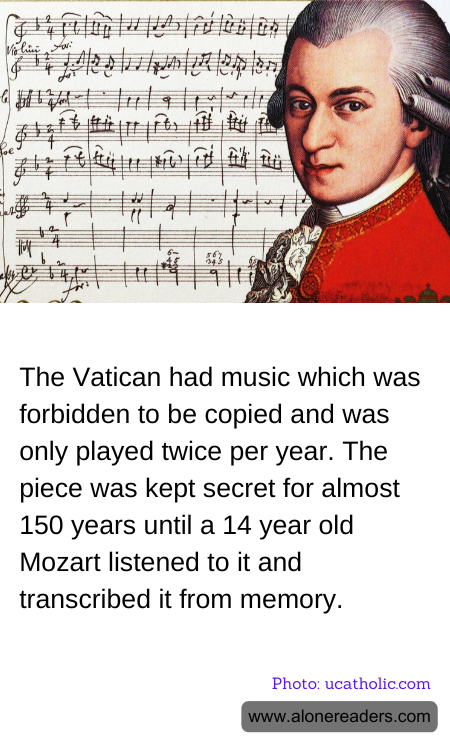
The aura of mystery and exclusivity around the Miserere only grew over the decades. This secrecy was maintained successfully until a young prodigy by the name of Wolfgang Amadeus Mozart visited Rome in 1770. At just 14 years old, Mozart attended a performance of the Miserere in the Sistine Chapel. Moved by its beauty and complexity, he returned to his accommodations and, from memory, wrote down the entire score. Astoundingly, he returned to the chapel for a second hearing to correct any mistakes in his initial transcription, capturing the piece with near-complete accuracy.
Mozart’s remarkable feat of memory and musical transcription not only showcases his extraordinary musical genius but also marked a pivotal moment in music history. His transcription eventually led to the piece becoming more widely known and performed beyond the walls of the Vatican. The papal ban on copying the music was lifted by Pope Pius IX in the early 19th century, allowing Allegri’s Miserere to be shared and admired globally.
Today, Allegri's Miserere remains one of the most celebrated and poignant Renaissance works, often performed in both sacred and secular contexts around the world. Its journey from secretive exclusivity to worldwide acclaim is a testament to the enduring power of music to move and inspire across generations and geographies. Moreover, the story of Mozart and the Miserere adds a fascinating footnote to the history of music, underscoring the incredible abilities of one of classical music’s greatest talents.