More About This Card
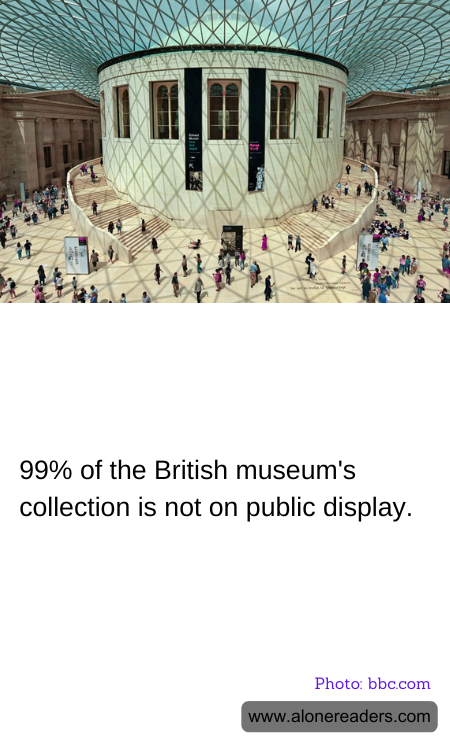
The British Museum, one of the world's most renowned cultural institutions, is home to a staggering collection encompassing millions of objects that represent the entirety of human history and culture. An often surprising fact about this venerable institution is that 99% of its collection is not on public display. This staggering figure underscores a challenge common to many major museums globally: the delicate balancing act between conservation, research, and public accessibility.
The reasons behind this vast majority of artifacts being kept from public view are multifaceted. Primarily, the sheer volume of items in the museum's possession far exceeds the space available in the public galleries. Exhibiting all items simultaneously is logistically impossible, prompting the museum to make selective decisions about what is displayed based on factors like historical significance, public interest, and thematic relevance to current exhibitions.
Furthermore, many of the stored artifacts require specific conditions to ensure their preservation. Light, temperature, and humidity control are critical factors in preventing degradation. Items particularly susceptible to these conditions are often kept in controlled environments to avoid any damage. Additionally, some items may be too fragile to be displayed or may require restoration work, which can be a lengthy process requiring careful planning and execution.
Despite these practical limitations, the British Museum endeavors to rotate its exhibits, thereby giving different artifacts time in the public eye and keeping the museum experience dynamic and educational. Moreover, the museum has been gradually digitizing its collection, providing online access to detailed images and information about its hidden treasures. This digital archive not only helps in democratizing access to the museum’s vast resources but also serves as a crucial educational tool, facilitating global research and interest.
To further educational outreach, the British Museum also loans out many items to other exhibitions and institutions around the world. This practice not only aids in the preservation efforts by sharing the burden of conservation but also helps in promoting cultural exchange and understanding across borders.
While it may be disappointing to some that a significant portion of the British Museum's collection is not always visible, these practices highlight the complex responsibilities facing the world's leading cultural institutions. Balancing accessibility with conservation, while also accommodating research and educational purposes, are challenges that the museum continues to navigate with its extensive and varied collection, ensuring both its sustainability and continued relevance in a changing world.