More About This Card
The term "abracadabra" is often associated with stage magicians and conjuring tricks, sparking images of a magician pulling a rabbit out of a hat or performing an impossible feat. However, the origins and historical usage of this enigmatic word stretch back into ancient medicine and mysticism. "Abracadabra" was not merely a tool for theatrical magic but was also employed as a magical formula intended to cure fevers and other ailments.
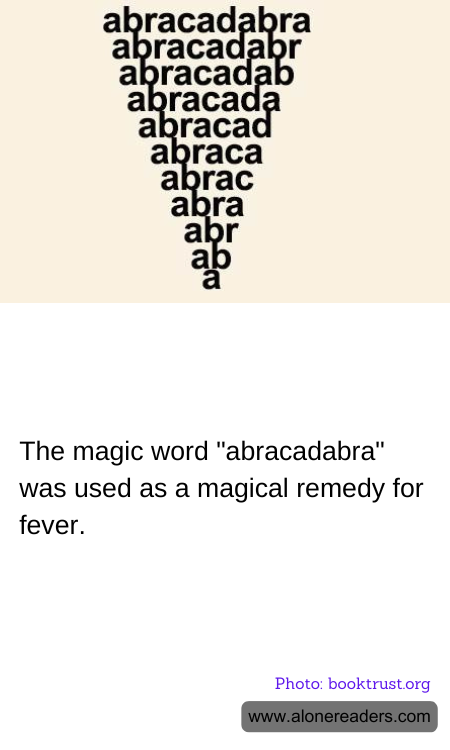
Dating back to the second century, "abracadabra" found its first known mention in a Roman medical book by Serenus Sammonicus, physician to the Emperor Caracalla. The word was prescribed as a remedy for ague, a form of fever characterized by chills. Sammonicus's method for utilizing "abracadabra" involved writing the word on a piece of parchment in the form of a triangle or pyramid, with each subsequent line omitting the last letter, until only the letter 'A' remained. This triangular amulet was then hung around the patient's neck by a linen thread and was believed that as the word diminished in form, the fever would diminish in severity, eventually disappearing altogether.
This mystical approach to healing reflects the ancient belief in the power of words and their intrinsic connection to the physical and spiritual realms. The peculiar configuration in which the word was written was crucial to its supposed magical efficacy. By arranging "abracadabra" in a diminishing triangle, it was thought that the disease itself would gradually weaken, just as the word did.
The usage of "abracadabra" as an anti-fever charm persisted through the Middle Ages in Europe, becoming a common feature in the practices of folk medicine and magical healing traditions. Its application was not limited to professional physicians but extended into the daily practices of ordinary people trying to fend off diseases in a time when medical knowledge was sparse and largely intertwined with superstition.
Despite its ancient roots, the word "abracadabra" has largely shed its medicinal connotations in modern times, transitioning instead into the lexicon of performance magic. This transformation underscores not only the evolution of language but also the shift in societal understanding of health and science. As the mystical and superstitious elements of old were gradually overshadowed by advances in medical science, so too did "abracadabra" morph from a serious cure-all into a playful symbol of mystery and wonder in magic shows. This historical journey from a tool of ancient medicine to a modern cultural icon illustrates the changing landscape of human belief and the enduring appeal of magic, in both its literal and theatrical forms.