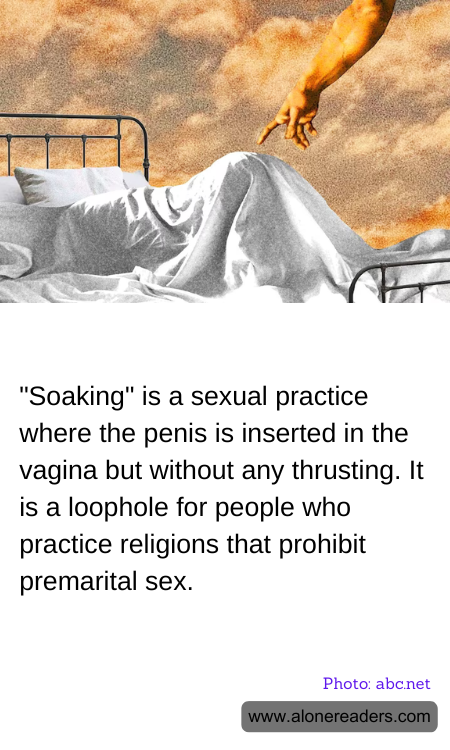
"Soaking" is a controversial sexual practice primarily discussed in the context of religious individuals, particularly among certain Mormon circles, although the extent of its prevalence is debated. This practice involves a penis being inserted into the vagina without any subsequent motion or thrusting. The rationale behind this behavior is to technically maintain virginity or adhere to religious doctrines that explicitly forbid premarital sexual intercourse while still engaging in a form of intimacy.
The concept rests on the belief that because there is no thrusting or active sexual movement, it does not count as sex in the traditional sense. This interpretation allows participants to believe they are not violating their religious precepts. Despite this rationale, many religious leaders and communities might still consider soaking to be inconsistent with the spirit of their teachings concerning premarital sexual purity and chastity.
Critics argue that soaking is a way for individuals to bypass the ethical framework set forth by their religions without addressing the underlying principles those regulations intend to instill, such as discipline, respect for one's body, and the sanctity of marriage. Furthermore, this practice might not fully mitigate the emotional or psychological implications associated with premarital sexual activities, and could lead to confusion or guilt among participants who feel they are bending the rules of their faith.
In a broader context, the practice of soaking highlights the complex ways in which individuals navigate their sexual identities and religious beliefs. For many, reconciling these aspects of their identity can be challenging, leading to creative interpretations or modifications of doctrine. This underscores the importance of open discussions about sexuality within religious communities, as well as comprehensive sex education that respects personal beliefs while promoting health and safety.
