More About This Card
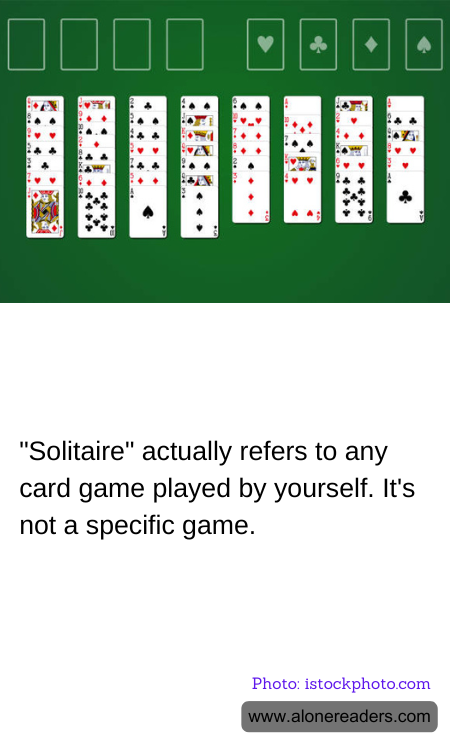
Solitaire, commonly known simply as a game involving cards and a solo player, actually refers to a broad category of games rather than a single, specific one. The variety of solitaire games is vast, with each having its unique set of rules, objectives, and setups. Traditionally, these games are played with a standard deck of 52 cards, where the primary challenge is to organize the cards in a predetermined fashion, usually involving suits and sequences.
The most popular version globally is Klondike, often just called solitaire in the United States and Canada. In this game, the objective is to build four foundation piles, one for each suit, in ascending order from Ace to King. What makes Klondike the essence of solitaire for many is its perfect blend of luck and strategy. Players must decide on their moves wisely as they reveal and organize cards from the tableau and the stockpile to build the sequences and eventually clear the game.
However, there are many other solitaires, each with its flavor and challenge. For instance, FreeCell, which gained popularity after being included in early versions of the Microsoft Windows operating system, allows players full visibility of all cards from the beginning, emphasizing strategy over luck. In contrast, Spider Solitaire, also popularized through Windows, involves dealing with ten stacks of cards within the tableau, aiming to clear the field by organizing cards in descending sequences of the same suit.
Patience games, as they are also known in countries like the UK, originally hail from northern Europe and later spread to France and then globally. Each game variant demands different strategies, with some requiring more skill than luck. For example, some games, such as Pyramid and TriPeaks, introduce different shapes and goals in the layout, offering a fresh take on the traditional challenge of sequence-building.
The adaptability of solitaire games makes them particularly captivating. With the rise in digital gaming, solitaire has seen numerous electronic versions, each offering new twists and various levels of complexity. These digital platforms have helped introduce the old classic to new audiences, ensuring its place as a beloved pastime for solitary engagement.
In summary, when referring to solitaire, it is essential to recognize the breadth and variety encapsulated within this term. Each game under the solitaire umbrella brings a unique set of rules and challenges that cater to different styles of play, making the category as diverse as it is entertaining. Whether it's for passing time or serious mental exercise, solitaire offers something for everyone, proving itself as more than just a simple card game.