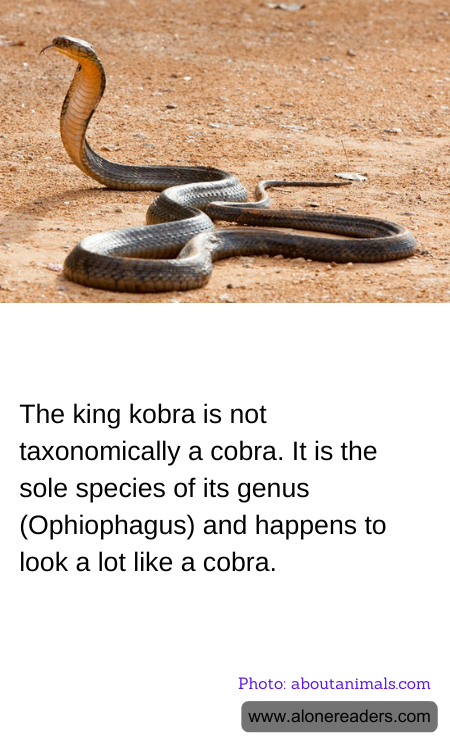
More About This Card
The King Cobra, often mistaken for a member of the true cobra species, holds a distinct place in the realm of snakes due to its unique taxonomy. Scientifically known as Ophiophagus hannah, the term Ophiophagus directly translates to "snake-eater," which is a fitting designation considering its diet primarily consists of other snakes, including those that are venomous. Unlike true cobras, which belong to the genus Naja, the King Cobra is the only member of the genus Ophiophagus.
This classification highlights its distinctive characteristics and evolutionary path. King Cobras are renowned for their impressive length, which can reach up to 18 feet, making them the longest venomous snake in the world. Their size enables them to deliver large volumes of neurotoxic venom, which they utilize with remarkable precision when hunting or in self-defense. The hood, which they flare when threatened, combined with their ability to raise up to one-third of their body off the ground, allows them to scan the surroundings and pose an intimidating figure, much like the true cobras.
Despite its fearsome reputation, the King Cobra plays an essential role in controlling the population of other snakes in its habitat, which helps maintain the ecological balance. This snake is found predominantly in forests throughout India, Southeast Asia, and the Philippines, where it prefers dense highlands and areas near streams.
Given its unique status and ecological importance, conservation efforts are crucial to ensure that the King Cobra does not succumb to habitat loss and other environmental pressures. As an apex predator in its ecosystem, the survival and health of the King Cobra are vital indicators of the overall health of the ecosystems in which they reside. Engaging local communities in conservation, conducting further research, and fostering a greater understanding of this majestic but often misunderstood snake are essential steps in preserving its numbers for future generations.