More About This Card
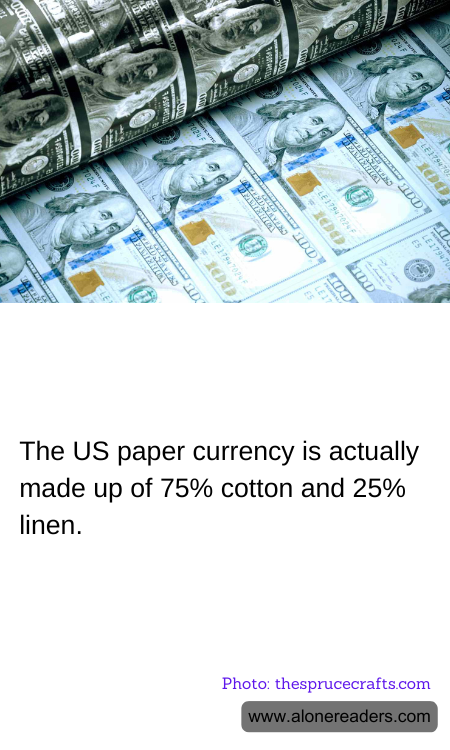
Contrary to common belief, United States paper currency is not made from traditional paper derived from wood pulp. Instead, it consists of a special blend of materials that, remarkably, include 75% cotton and 25% linen. This unique composition gives the currency several essential qualities, such as durability, a distinct tactile feel, and a reduced likelihood of tearing, which are crucial for currency that changes hands frequently.
The production process of U.S. paper currency is intricate. Both cotton and linen fibers provide the notes with a robust structure that can withstand the rigors of daily use. The typical lifespan of various denominations varies, partially due to this special composition; smaller denominations tend to circulate more quickly and therefore wear out faster. To enhance durability further, during the manufacturing process, other elements like security threads and watermarks are also embedded that are both functional and difficult for counterfeiters to replicate accurately.
The decision to use such materials is also guided by security concerns. Currency needs to be difficult to counterfeit, and the specific feel of the cotton-linen paper is instantly recognizable. Additionally, it can be treated with various substances that add layers of security. For example, color-shifting ink and microprinting are employed to help authenticate genuine notes while making the counterfeiting process more challenging and less appealing to potential counterfeiters.
Furthermore, environmental considerations have also become a part of the conversation around the materials used in currency production. While typical paper made from wood pulp can be more environmentally taxing due to deforestation and the chemical processes involved in its manufacture, cotton and linen are resource-intensive in other ways. However, since currency is not produced as frequently or massively as regular paper, its environmental impact is somewhat mitigated.
Overall, the choice to use a cotton-linen blend for producing U.S. currency reflects a balance of practicality, security, and tradition, ensuring that the nation’s money is both enduring and hard to fake, circulating stably and securely through the economy.