More About This Card
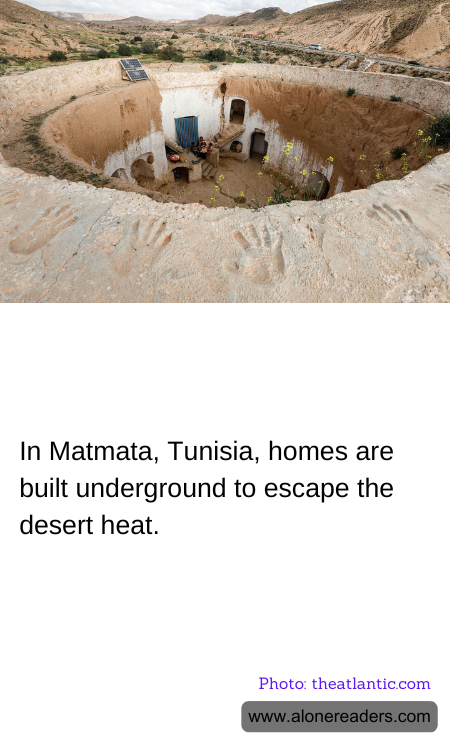
In the arid landscapes of southern Tunisia, the small Berber-speaking town of Matmata provides an outstanding example of human adaptation to harsh environmental challenges. Here, the residents have devised a unique solution to the scorching desert heat: digging their homes underground. These subterranean dwellings, locally called "troglodyte" houses, are clever feats of ancient engineering that utilize the earth itself as natural insulation.
The underground homes of Matmata are dug into the soft limestone prevalent in the region. The traditional method involves creating a large circular pit in the ground, from which rooms extend horizontally into the sides of the crater-like depression. This central courtyard becomes a communal area, exposed to the open sky but sheltered by the earth from the relentless sun. Around it, various rooms are excavated, such as bedrooms, kitchens, and storage spaces, each carved meticulously to form an enclosed living space that maintains comfortable temperatures year-round.
The construction of these houses is not only functional in terms of climate control but also sustainable. The earthen structures blend seamlessly into the surrounding landscape, minimizing environmental impact and preserving the natural aesthetics of the region. Additionally, the earth walls help regulate humidity and provide acoustical benefits, creating a quiet, serene living environment that reflects the calm and resilience of the local communities.
Matmata's architecture gained a wider audience following the release of the original "Star Wars" movie in 1977, in which the town was used as the setting for Luke Skywalker's home on the planet Tatooine. This exposure has since brought a modest stream of tourism to the area, adding a new dimension to the local economy. Visitors to Matmata can experience staying in these unique underground homes, many of which have been converted into hotels, offering a glimpse into a lifestyle uniquely attuned to its environment.
Evolving through centuries, the underground homes of Matmata stand as a testament to the ingenuity and resilience of its residents, illustrating how human habitats can be thoughtfully designed to meet environmental challenges while maintaining cultural traditions and sustainable living practices. As modern architects and urban planners increasingly seek sustainable and eco-friendly building solutions, Matmata’s troglodyte houses offer insightful inspirations for integrating natural elements with human dwellings in harsh climates.