More About This Card
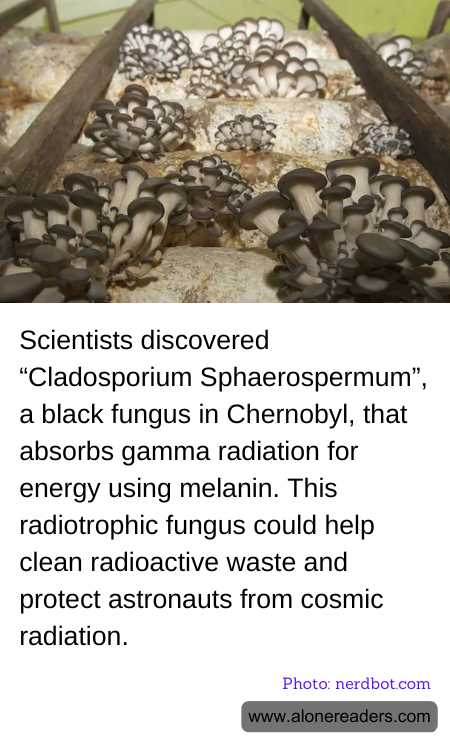
In the eerie shadows of the Chernobyl nuclear disaster zone, an astonishing discovery was made that could revolutionize how we handle radioactive environments and protect human health in outer space. "Cladosporium sphaerospermum", a species of black fungus, has adapted to its harsh, toxic surroundings in a rather remarkable way. It thrives in environments rich in gamma radiation, which it absorbs and utilizes for energy through a pigment known as melanin. This process, similar to how plants use chlorophyll to turn sunlight into energy, positions this fungus as a potential ally in some of the most challenging arenas of science and technology.
The implications of this discovery extend beyond the abandoned ruins of Chernobyl. One of the most promising applications is the bioremediation of radioactive waste sites. By harnessing the radiation-absorbing properties of Cladosporium sphaerospermum, scientists envision a natural and efficient method to reduce the harmful impacts of residual radioactivity on ecosystems and human populations. This approach could offer a more sustainable alternative to traditional methods, which often involve extensive physical cleanup and long-term containment strategies.
Moreover, the unique characteristics of Cladosporium sphaerospermum could be pivotal in space exploration. Astronauts exposed to cosmic radiation face significant health risks, including increased chances of developing cancer. Integrating this radiotrophic fungus into space habitats or spacecraft could lead to the development of living shields—biological barriers that absorb harmful radiation and thus protect astronauts during long-duration missions, such as those to Mars or beyond.
The study of Cladosporium sphaerospermum is still in its early stages, but the potential applications are vast. Further research is needed to fully understand the mechanisms behind its radiation-absorption capabilities and to scale these findings from laboratory settings to real-world applications. The integration of biology with radiation protection and waste cleanup efforts represents a novel intersection of disciplines that could greatly enhance our ability to manage and mitigate the risks associated with radiation in both terrestrial and extraterrestrial environments. This groundbreaking discovery not only expands our understanding of fungal biology but also pioneers a new frontier in the intersection of microbiology, environmental science, and aerospace technology.